You might not have to scale a mountain in Jordan to get to Aharon HaKohein’s kever
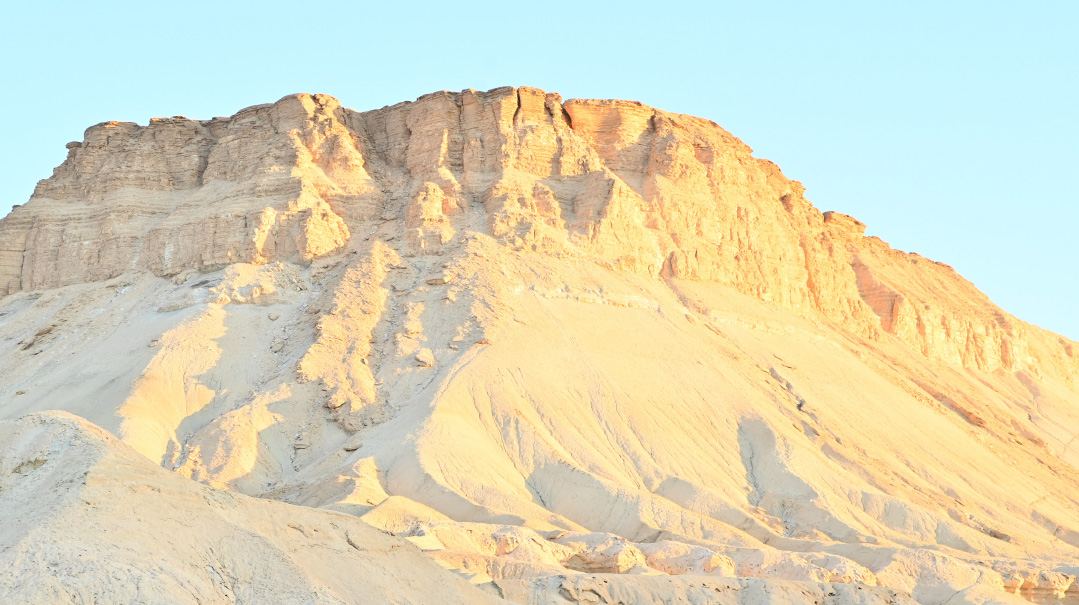
This Shabbos, Rosh Chodesh Av, marks Aharon HaKohein’s 3,297th yahrtzeit. If you’re in good shape, don’t mind climbing a mountain in southern Jordan, are willing to hide your tefillin and daven in secret, you can be at his kever the following day to mark the occasion. But what if you really don’t have to travel that far, or even need a passport — just a Jeep and a few hours to head down south?
IT was just before Rosh Chodesh Av, 1996, and the Israeli-Jordanian border had just been opened to free passage for Jews with Israeli passports. Over 100 chassidim, stripped down to their white shirts and sun-visors, didn’t let the opportunity go to waste. They straddled their donkeys and began the ascent up the Jordanian mountain “Jabal Haroun” (“Aharon’s Mountain”), which for centuries has been considered the Biblical site of Hor Hahar, the burial place of Aharon HaKohein.
While the dates of death of many Biblical figures are found in midrashic sources, the date of Aharon HaKohein’s death — Rosh Chodesh Av in the 40th year in the Desert, as Bnei Yisrael was on the cusp of entering Eretz Yisrael — is the only one mentioned in the Torah (Bamidbar 33:38): “And they traveled from Kadesh and camped at Hor Hahar, at the edge of the land of Edom. And Aharon HaKohein went up to Hor Hahar, at the command of Hashem, and there he died in the fortieth year, after Bnei Yisrael had come out of the land of Egypt, in the fifth month, on the first day of the month.”
These would-be mountain climbers decided to honor Aharon’s 3,268th yahrtzeit in style, with a first-ever pilgrimage to what many considered to be his grave atop Hor Hahar.
Create a free account to keep reading.