“And Lavan and Besuel answered, ‘From Hashem has this matter come; we cannot speak with you bad or good.’ ” (Bereishis 24:50)
After Eliezer requested permission for Rivkah to marry his master’s son, Yitzchak, her brother and father, Lavan and Besuel, responded that as this episode clearly came from Hashem, they therefore wouldn’t speak negatively or positively about this potential shidduch.
Their refusal to voice an opinion is difficult to understand. Were they opposed to the match, or supportive? Shidduchim is an area in which it’s exceedingly rare for people not to have any opinion. (Rabbi Ozer Alport, Parshah Potpourri)
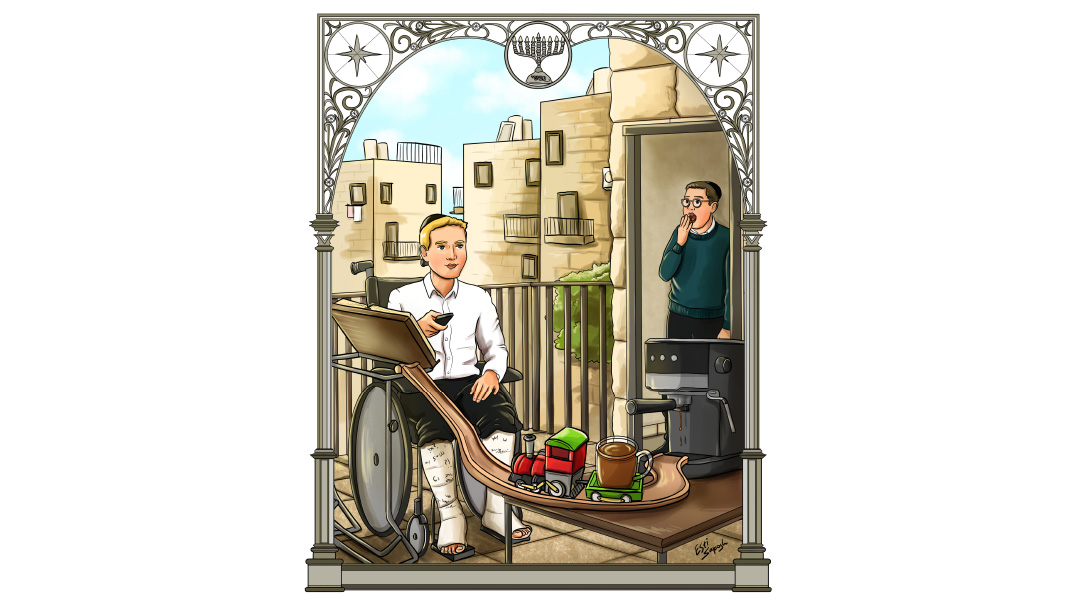
Open a discussion with my husband about “opposites attract” and you’ll get a well-informed explanation of magnetic fields, and a possible segue into Earth’s North and South Poles.
Meanwhile I’m trying to follow his line of thinking while wondering why opposites attracting have anything to do with planets, unless of course, you consider the truism that men are from Mars and women from Venus.
Rav Shimon Sofer, grandson of the Chasam Sofer, explains that when people are looking for a suitable marriage partner, they typically believe that a potential spouse must be like them for their marriage to be harmonious and successful. However, the Torah (Bereishis 2:20) describes the ideal wife as an ezer k’negdo — a helpmate opposite her husband.
Many times it’s not in our best interest to marry somebody who’s too similar to us, and spouses benefit when they’re different from one another and capable of compensating for each other’s shortcomings.
For example, Rav Sofer writes, people have widely varying approaches to spending money. If a spendthrift marries somebody with the same attitude toward money, they’ll quickly go bankrupt. Similarly, if a miserly person marries a spouse who’s equally tightfisted, they’ll save a lot of money for the future, but will be incapable of enjoying the present. To prevent these scenarios from occurring, Hashem specifically arranges shidduchim in which both parts of the couple have different backgrounds, styles, and personalities, so they’ll be able to compromise and reach a healthy balance.
Rav Sofer adds that this concept is not limited to money. Hashem often pairs intense people with more laid-back spouses and strict disciplinarians with those who have a more relaxed philosophy about child raising. It’s the synthesis of their disparities that creates a healthy harmony in the home.
This disparate approach applies in most other areas in our lives as well, with his math-science brain versus my literature-history left temporal lobe. (Is that why I’m a lefty?)
In fact, we rate pretty low when figuring out our compatibility calculator.