The story of Postville is more than the story of a plant closing in a small town. It is the story of a small, American Gothic-style prairie town that was forced by economics to accept an unfamiliar cultural diversity. It is the story of a widely-varied yet tightly-knit Chassidic community putting down roots in an unlikely location. And it is the story of an entire town united in prayer, waiting and hoping that the homes and businesses they’ve struggled to create will survive
I
n 1987, Postville, Iowa, was a dying town.
The hospital had boarded up its windows. Local businesses were folding, crumpling before the onslaught of Wal-Mart and other national chains. Small farmers were being swallowed by agricultural conglomerates. The young people who had gone away for an education didn’t come back; there was nothing to come back to. The old slaughterhouse that had once been operated by Hygrade lay abandoned for twenty years, rotting and infested with rodents.
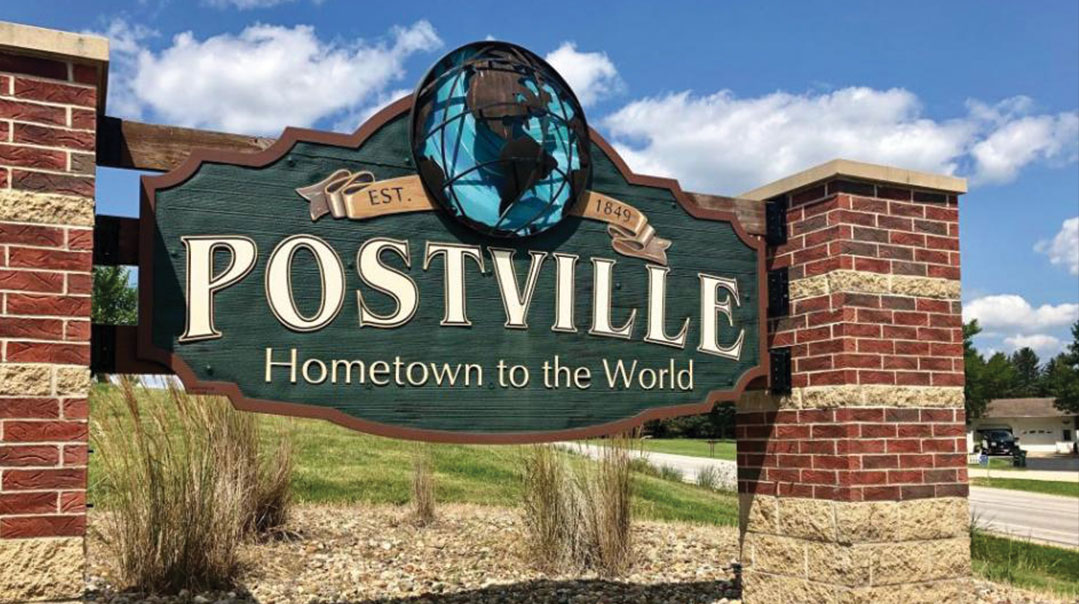
Into this blighted picture walked Aaron Rubashkin, a Russian-born butcher from Brooklyn with a good eye for a business opportunity. A group of local bankers and businessmen offered him startup money to help reopen the old Hygrade plant and establish his kosher meat packing business just outside the city limit. Both the Rubashkin family and the locals were enthusiastic, and a pioneering group of Lubavitcher Hasidim staked a claim in this tiny town that calls itself “Hometown to the World.”
Within ten years, the plant had grown exponentially, becoming the largest kosher meat packing plant in the world. The Rubashkins applied modern mass-production methods to kosher shechita, processing close to two million pounds weekly of beef, chicken, lamb and turkey. Now renamed Agriprocessors, the plant dominated America’s kosher meat market, capturing 60 of the market for beef and 40 for chicken. Their customer list, which included Muslims and health-conscious non-Jews, topped 11 million customers with sales of 10.5 billion dollars annually.
Agriprocessors gave a new meaning to the slogan “Hometown to the World” by bringing in a whole new population to Postville. The newcomers consisted of Chassidic shochtim, mashgichim and their families, as well as immigrant populations of Eastern European, Guatemalan, and Mexican workers. Languishing Postville businesses perked up, as Jewish and Hispanic families began to buy shoes and groceries and bring in their dry cleaning. Over time, a Jewish community developed that boasted a shul, a mikvah, a yeshiva, a Jewish library, a kosher grocery.
Create a free account to keep reading.