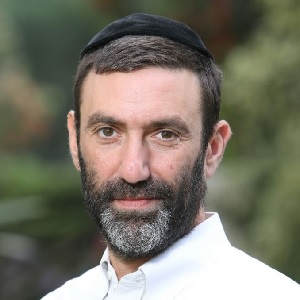
International law expert, Professor Eugene Kontorovich, on surprise US settlement decision
Prof. Kontorovich received his law degree from the University of Chicago and is currently director of the Center for International Law and the Middle East at George Mason Scalia School of Law. He is also a scholar at Kohelet Policy Forum, a think tank in Jerusalem.
It’s important because it undermines the central narrative used to delegitimize Israel’s presence in both eastern Jerusalem and in Yesha. It’s hard to tell Jews as a moral matter that they can’t live in the Old City of Jerusalem or in Hebron. In order to try to convince Jews that they had no right to live in these places, they tried to couch this as a general rule of international law, applicable to everyone. What the Trump Administration is saying is that no, these are not in fact the rules, these are made-up rules that were only applied to Israel.
It’s quite important to note that the notion that settlements are illegal had not been applied anywhere else since adoption of the Geneva Conventions of 1949. When you talk to people about legal arguments behind the idea that settlements are a war crime, what they typically invoke is an “international consensus.” [They say] the international community agrees, so how can you say it’s legal if all the countries of the world say it’s illegal? They want to appeal to consensus. To put it in terms that your readers might appreciate, they want to say that we go with the majority, which is by the way not how we hold in international law. There is no international law principle that we hold like the majority. International law is not a popularity contest.
So when the most important country in the world and its State Department say we disagree, it’s impossible to say there’s an international consensus anymore. When everyone says we all have to fall in line, the only way that can be broken is if someone stands up and says, that’s not how we regard this. By so doing you actually destroy the consensus, which is itself the biggest argument for the consensus.
Create a free account to keep reading.