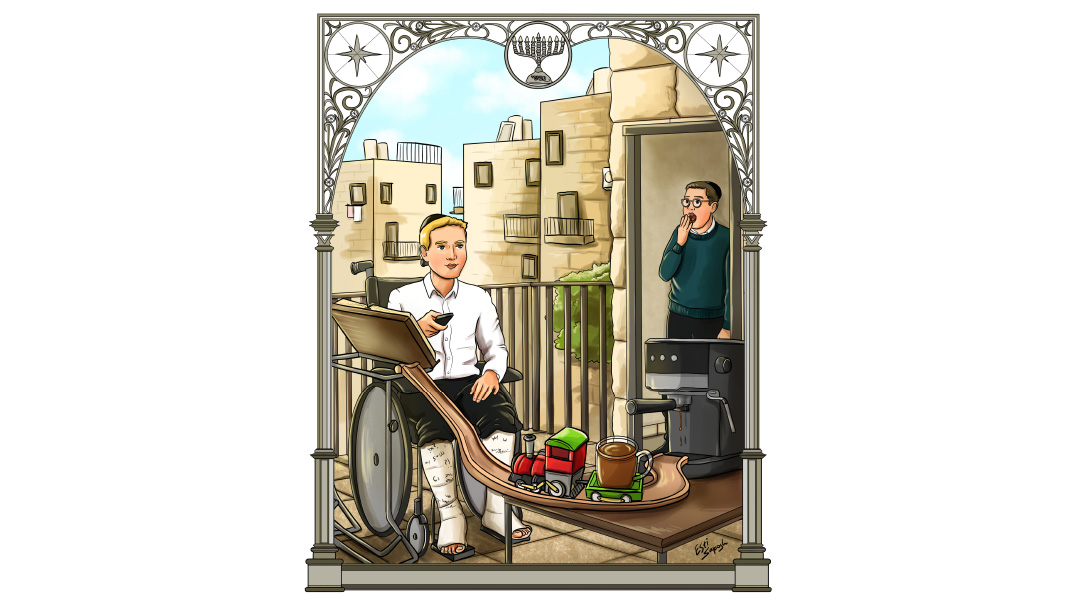
“And the neighbors are quiet,” she said. Something about her smile made me uneasy

There’s music playing from some of the stores across the street, and lots of foot traffic: groups of teenaged girls dressed according to an unspoken fashion code, fathers carrying boxes of doughnuts, mothers stocking up on drinks or paper goods for their family parties. And of course, lots of kids coming and going from the shekel store.
My son and I move to make room as a big, dark-blue van turns in next to us. The driver, a young man with long peyos, stops outside the yellow gate blocking his way. He gets out of the van, punches some numbers into an electric keypad, then hops back in and drives onward as the yellow gate opens up.
“Do you know what’s inside that van?” I ask my son.
He shrugs.
“Do you know what that man does?”
No, he doesn’t. So I tell him that’s a chevra kaddisha van, and the man inside does one of the most important, and at times difficult, tasks in Yiddishkeit.
Create a free account to keep reading.