Soon after Rav Boruch Ber Leibowitz was buried in 1939, the Jewish community of Vilna was destroyed and his unmarked grave forgotten. But then, 70 years later, a little girl’s sudden deformity led to a series of seemingly unrelated events that resulted in the discovery of his resting place. This week, on the Torah giant’s 75th yahrtzeit, the Torah world will gather to honor his memory
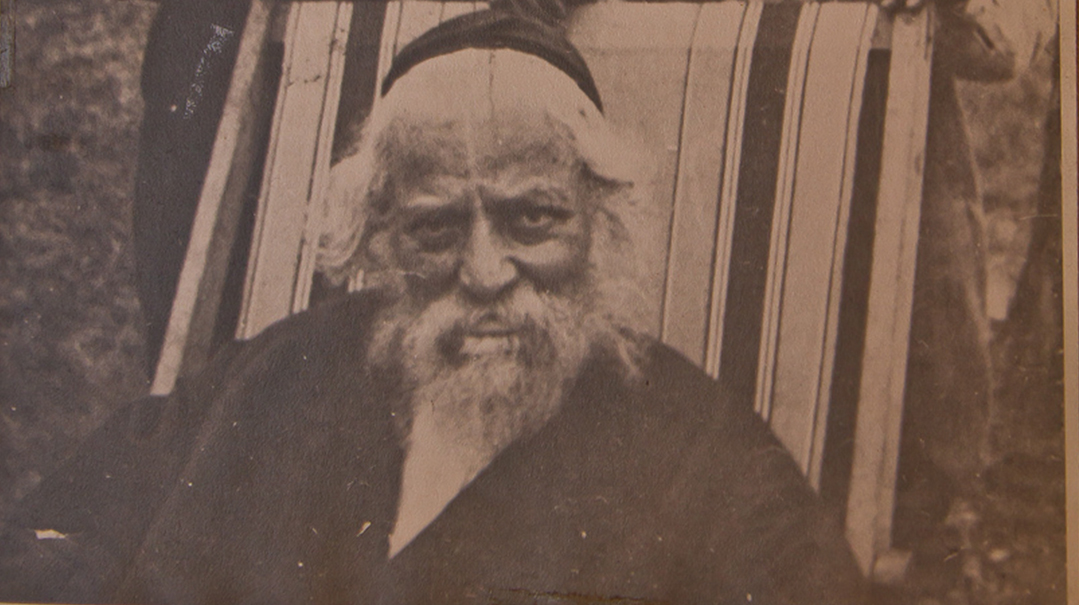
“The Rebbi is coming!” whispered Rav Boruch Ber Leibowitz, the rosh yeshivah of Yeshivas Knesses Beis Yitzchak in Kamenitz. “I must wash my hands in honor of the Rebbi!”
“The Rebbi” could refer to only one person. Throughout his life, it seemed as if Rav Boruch Ber had never left the benches of the beis medrash of Volozhin, and had never stopped quoting the words of his rebbi, Rav Chaim Soloveitchik. “The Rebbi” was at the center of Rav Boruch Ber’s life.
Now, on the 5th of Kislev, 5700 (1939), Rav Boruch Ber faced his final hours. The Nazis had already invaded Poland and Jews everywhere had fled in panic and confusion to one of the safe spots, Vilna. Rav Boruch Ber Leibowitz and other Torah scholars had also fled to the Lithuanian capital, where Rav Chaim Ozer Grodzensky, the leader of Diaspora Jewry, had greeted Rav Boruch Ber and asked him to open a yeshivah for the masses of refugees.
But Rav Boruch Ber’s stay in Vilna did not last long. Already in his 70s, the Torah giant was ebbing away. He asked his students to accompany him in those last moments — and there they stood.
Create a free account to keep reading.