Shedding New Light on Familiar Laws of Chanukah

We are enjoined to light the menorah the eight nights of Chanukah in order to fulfill the mitzvah of pirsumei nissa — publicizing the miracles that transpired in the times of the Chashmonaim. And yet many of the halachic requirements for kindling the lights, if they don’t exactly run counter to this goal, seem upon first glance to be tangential toward meeting it. What is the reason underlying this seeming incongruity?
Shedding    New    Light    on    Familiar    Laws    of    Chanukah
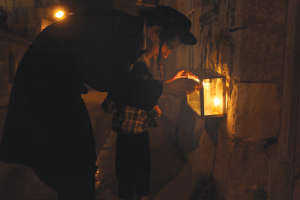
The pirsumei nissa of Chanukah however is different from that of both Arba Kosos and mikra Megillah. Chazal did not require any public lighting of the menorah and the minhag of lighting it in shul is of later post-Chazal origin.[i] Yet it must be lit where it can be seen by all passersby. It contains elements of both the public and the private since it is performed by individuals but is directed toward the public. In ancient times every householder lit his menorah outside the door to his home where it would be seen by all.[ii] Yet it is also preferable for every member of the household to light his own menorah and keep it in a distinct place.[iii] While the mitzvah was performed in a public area it was done by individuals acting independently. Why does Chanukah require a unique form of pirsumei nissa combining individual performance with public display?


To read the rest of this story please buy this issue of Mishpacha or sign up for a weekly subscription