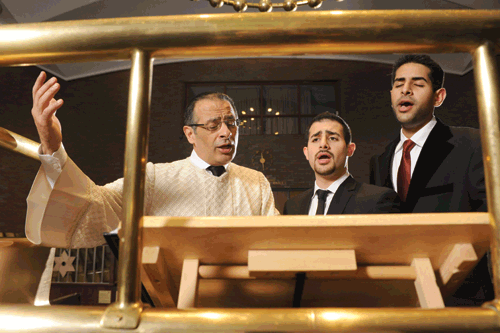
For Chazzan Yehezkel Zion, plumbing the richness of Sephardic music isn’t just another job; it’s an avodah — a way to preserve a magnificent liturgical heritage, pass on a generations-old family tradition, and, now that the wedding season is back in full swing, joyfully enhance the mitzvah of gladdening the hearts of a new troupe of chattanim and kallot.
People who live in Israel or visit frequently often think they know what Sephardic music is all about. After all they hear it blaring from taxi radios. What they don’t realize is that comparing Israeli pop music to traditional Sephardic chazzanut and orchestra-accompanied classical singing is like comparing l’havdil the Rolling Stones to Beethoven. Far from frenzied thumping dance music traditional Sephardic music is stately exalted and as demanding to sing as any Western opera — with a repertoire equally as vast.
Chazzan and singer Yehezkel Zion has been immersed in this tradition since he was a baby; today he is at the top of his form. Watching him perform in concert is transfixing. He has a relaxed unhurried self-assured presence on stage despite the fact that Sephardic music demands the ability to perform runs and trills to hold notes for lengthy intervals move between scales and hit half and quarter tones with a precision beyond the reach of most Western-trained ears. His masterful tenor is backed up by an orchestra that includes both Western instruments (keyboard violins flutes) and Arabic ones: an oud (a sort of guitar resembling a balalaika) darabukas (bongo-type drums) and a kanun (zither-type instrument that makes wonderfully celestial rippling chords). The music ranges from joyous to solemn and while strongly rhythmic it always contains great dignity and expressiveness.
At his home in Brooklyn Mr. Zion’s manner is equally relaxed and welcoming. Despite its location in Kensington the Zion residence evokes a sense of Middle Eastern elegance with its spare airy decor and gracefully carved furniture. Large framed photos of Chacham Ovadiah Yosef shlita and Rav Nissim Yagen ztz”l hang conspicuously in the hallway; a small piano sits in a corner of the living room. Today the house is quiet; the older boys are still at work the younger ones in day camp Mrs. Zion tackling a summer project in the basement with one of her daughters.
“I have a big brachah in my job” Yehezkel says as we sit down. “Most of my work takes place at simchahs. This week I have four weddings. There was one year I performed at more than seventy weddings. If you take away Shabbat and all the days we don’t make weddings that’s a lot.”
Create a free account to keep reading.