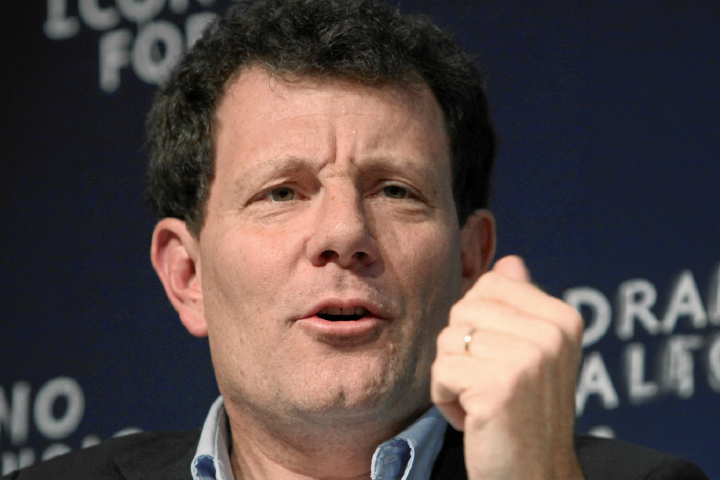
Yaakov Shwekey, Yisroel Besser, & Doni Gross fuse story and song to enrich your Shabbos soundtrack

IT isn’t often that the book and music worlds meet — the creative process and logistical effort that go into a great album are so different from the crafting of a book that it’s hard to imagine a project that fuses the two.
But Yaakov Shwekey’s upcoming project aims to do just that.
It includes both a musical album, produced by Doni Gross, and a book, coauthored by Yaakov and bestselling author Yisroel Besser, and published by ArtScroll/Mesorah Publications.
Shwekey.
Besser.
Gross.
It sounds like the collaboration of the century. Over the past 25 years, Yaakov’s acclaim has spread across the world, his incredible performances and numerous blockbuster hits inspiring thousands of Jews. Doni’s not as visible in the music world — as a producer and arranger, most of his work takes place behind the scenes — but music fans know that he’s one of the biggest new talents in the industry. And Yisroel Besser’s writing has stirred and empowered countless readers, whether through the pages of this magazine or his numerous bestselling books. What brought these three creative dynamos to one shared table? What’s this project all about?
I sent a text to Yisroel Besser, asking when he’d be available to talk about the project.
“I’ll have time to talk soon,” came the reply. “But first, you must see this clip. Then you’ll know what we’re talking about here.”
He attached a short video — just 31 seconds long. It showed a brightly lit studio, with Doni Gross sitting on a swivel chair, concentrating on the massive screen before him. The monitor displayed multiple rows of audio data of various colors, stacked one atop another — a secret code that Doni was manipulating with practiced ease. After a brief silence, he clicked on one of the segments and hit delete. “Yaakov, let’s try singing it one more time!” he called out enthusiastically to the singer, who was perched on a barstool behind him, wearing a large headset. “It needs a little more of that Friday night flavor,” Doni continued. “Like, I want it to make me smell that bubbling chicken soup.”
Yaakov closed his eyes tightly, seeming to transport himself to the Shabbos seudah of his childhood. He then began singing into the mic again. The headset and computer screen seemed to melt away as he conjured a scene of tranquility and eternity, investing each word of the song with his own emotional inflections: “Dorshei Hashem, zera Avraham ohavo!”
The clip ended with Yaakov’s face frozen in that perfect singing position, finger pointing into the air.
Yisroel sent me a simple follow-up text: “You chap?”
I definitely did. This wasn’t just another album. It was an attempt to capture — and convey — a deep, essential truth.
It’s a warm Friday morning when I meet the trio in Doni’s studio. Doni’s in his element, sitting in front of the large screen, clicking and twisting the dials on his massive console expertly. Yaakov is dressed in a sharp charcoal suit and black tie, guitar in hand. “I gotta get into the Joey Newcomb vibe if I’m doing an interview in this studio,” he jokes, reminding me that Joey’s numerous hits were recorded in this very room.
“But you can’t really do the Joey thing wearing that suit,” Yisroel quips, pulling up a chair near the screen. They all laugh.
The mood quickly turns contemplative as Yaakov idly strums the guitar and takes us back in time.
“Around two and a half years ago, I went through an experience that I wouldn’t wish upon anyone: I lost both of my parents within one year,” he says. His mother, Mrs. Rachel Shwekey, passed away in May of 2023, and his father, Rabbi Menachem Shwekey, passed away on Purim 2024. During the mourning periods for both his father and mother, and the months that followed, Yaakov kept having flashbacks of nostalgic memories from his childhood. He knew that his parents had imparted a rich heritage that he and his siblings were reaping the benefits of and were passing on to their own children as well — but he felt he could share some aspects of their chinuch with a much wider circle.
Rachel Shwekey was of Ashkenazic descent, hailing from a family of Vizhnitz chassidim who survived the Holocaust, while her husband Menachem was a Syrian Sephardic Jew who was born in Cairo, Egypt. The couple integrated both worlds into their chinuch; while Mrs. Shwekey served both gefilte fish and kibbeh at their Shabbos table, Rabbi Shwekey graced the meals with various styles of zemiros. He encouraged his children to introduce new compositions to the table — anything to help them feel engaged and invested in the seudah.
“My brothers and sisters and I loved music, and my parents were the first ones to buy every new record that came out — from Dveykus to Diaspora Yeshiva Band, Jo Amar to Bentzion Shenker,” Yaakov relates. “We also listened to my dear friends Mordechai Ben David and Avraham Fried, as well as records from every chassidus, be it Modzhitz, Belz, or Chabad. So, we were influenced by it all.”
Yaakov remembers one Friday night when he began humming the tune of the new Shalom Aleichem from Rabbi Shmuel Brazil, which had recently been released on Regesh 3. “My father took great pride in his Egyptian Sephardic heritage and we always sang a traditional tune for Shalom Aleichem — but when he saw that we connected to this new tune which we had learned in camp, he switched things up for us,” he shares. “He understood that if we’re welcoming the malachim into our home, we should do what we can to keep the children involved, locking their hands with those malachim to dance with them.”
Reb Menachem’s dedication to the aura and tranquility of Shabbos was on full display every week. He worked in construction for most of Yaakov’s childhood, and the kids knew that his parnassah situation was volatile; it was up, then it was down, and then it was briefly up again before another downward spiral. But when Shabbos came, none of it ever mattered. He left behind all those concerns and entered his element, and the atmosphere was electric.
“I think it’s so important to share that with the multitudes of young parents who are trying week after week to inspire their children at the seudah. You have to be visibly excited for Shabbos. You have to express your emotion and your yearning for Shabbos, song after heartfelt song.”
Yisroel Besser points out why our cherished niggunim strike such a deep chord within us, and why their unique power is so relevant today. “Look around at most yeshivos today. The majority of them are singing far more during the Yamim Noraim than they were when I was a bochur,” he says. “And look at the proliferation of musical Hallels. Look at how so many shuls are organizing trips to Europe to visit mekomos hakedoshim. Look at Uman. Look at Meron. These things are exploding.”
Yisroel goes on to share his take on this observation. “What may have been more based on intellect in the past is much more based on emotion today. We are an emotional dor, and to keep ourselves and our children invested, we need to build a deep love and connection for our greatest gifts in life — especially Shabbos.”
I once heard Rabbi Dovid Gottlieb, noted lecturer at Ohr Sameach, echo Yisroel’s point. “When I started engaging with potential baalei teshuvah in the 70s and 80s, they were far more argumentative, debating every point that I would bring up, as though their life decisions depended totally on philosophical evidence. But today, things are much more about the hergesh — does this feel like truth to me? Do I feel inspired?” In tribute to his parents — and in recognition of just how vital is the gift they gave him — Yaakov Shwekey is aiming to harness that capacity for hergesh and fire up a new generation’s heartbeat of their relationship with Hashem — the holy Shabbos, the gift which is just beini uvein bnei Yisrael.
So what sparked the idea? Yaakov was sitting shivah for his mother, solemnly sharing memory after memory with his friends, including his close friend Yisroel Besser, whom he had gotten to know through the lyrics he had written for some of Yaakov’s English songs, such as Your Time and The Wonder of Life. “Yaakov, you need to share this stuff with the world,” Yisroel said at one point. “Your parents lit you on fire, and so many people can benefit from their message as well.”
The pair talked about it for a few minutes, and then the idea hit them. The Shwekeys uplifted their sons and daughters by teaching them to adore Shabbos through song. What better way to perpetuate their legacy than by doing a comprehensive project on the music of Shabbos?
“We thought: Let’s record the actual songs, starting from Kabbalas Shabbos to Havdalah, and also write a book containing timeless lessons and insights about each part of the Shabbos zemiros experience,” Yaakov says. Rabbi Gedaliah Zlotowitz of ArtScroll/Mesorah Publications was enthused by the book concept: The plan was to have Yisroel write a more pshat-based commentary on the zemiros, adorning the beautiful age-old lyrics with explanations and interpretations from a wide array of gedolim, all with his signature delivery and style. Along with that, Yaakov would author his personal observations and anecdotes to accompany the songs.
It’s easy to see why the album aspect sounded appealing: If Yaakov Shwekey was going to release a Shabbos album, it was sure to hit every right key and warm thousands of hearts in preparation for Shabbos each week. But Yaakov Shwekey was never famous for sharing his own chiddushim and divrei Torah with his audience; why would a Shwekey-Besser book collaboration would be a worthy project to pursue?
Yisroel knew that behind his friend’s well-known image as a star performer lay a deep reservoir of wisdom and life experiences. “And you know who knew it even more than me?” Yisroel remarks. “His wife, Mrs. Jenine Shwekey.”
Jenine, who cofounded the Special Children’s Center, running a massive klal-machine of her own, was always a firm believer in her husband’s ability to inspire beyond his singing. She understood that his Torah knowledge and relationship to the deeper meanings of the words were always present when he was recording songs in the studio or performing them on stage; he was always just too humble to share it vocally. But when the idea of a book about the songs of Shabbos emerged, she knew it was time to push Yaakov to share his insights with the world.
While everyone knows of Yaakov Shwekey the star singer, less well-known is that he never quite left kollel. He resolutely maintains a full first seder through thick and thin, most recently learning those morning hours at the kollel of Rabbi Shlomo Diamond in Deal, New Jersey. “Torah has always been the bedrock of everything he does, no matter where his musical career took him,” Yisroel explains. “So you can imagine that throughout those decades of learning, Yaakov spent a lot of time getting to understand the words of the songs he was singing.”
And aside from the insights, Yaakov has years of personal stories to share. ”
When I walk in the street, people are forever recognizing me and stopping me to say thank you, ask for a picture, and very often, to share a crazy personal story,” Yaakov relates. Across his various travels, be it to Caesarea, Los Angeles, or Buenos Aires, Yaakov taps into his fellow Jews’ struggles and victories. With this project, Yaakov would be able to share not just music, but also the soul-stirring stories that resulted from the heartwarming tunes.
“Music reaches far, and it reaches deep,” Yaakov says. “I have to share one story that kind of shocked me into realizing how distant a neshamah a good song can revive.”
A few years ago, Yaakov made plans to travel to Paris for a concert that was to take place Sunday night. The plan was to arrive before Shabbos along with his wife, and enjoy a Shabbos together before the concert. He called his mother, as he always did before he traveled, to let her know he was going abroad. “Paris? It’s so dangerous there!” Mrs. Rachel Shwekey exclaimed. He understood her fears — this was during a period of a number of anti-Semitic assaults on Jews in France.
Mrs. Rachel Shwekey insisted that he at least wear a baseball cap to cover his yarmulke. “But that’s so not who I am,” Yaakov recalls thinking to himself as he sat in the airport awaiting his flight. “I never hide that I’m a Jew. It’s my biggest source of pride.” Yaakov reassured his mother that he would be careful, but he couldn’t commit to wearing the cap. She gave him a brachah, and the Shwekeys boarded the flight.
That night, Yaakov and Jenine, along with their close friends Mr. and Mrs. Ilan Jaffa, left their hotel to go on a walk down Paris’ famous main road, the Champs-Élysées. Sure enough, it soon seemed like Rachel Shwekey’s foresight was right on target: The group saw a gang of about 20 tough guys on motorcycles, wearing menacing-looking bandanas, driving toward them.
Yaakov and Ilan instructed their wives to head toward the adjacent alleyway for safety, and in moments the gang was upon them. “Probably all you could think at that moment was how you should’ve listened to your mother,” Doni interjects.
“Actually, all I was thinking was to call out to my wife and ask her to book us beds in the closest hospital,” Yaakov says laughingly.
Just then, the leader of the group ripped off his bandana, took out an Israeli flag, and began to play Yaakov’s hit song from the stereo on his bike: “Am Yisrael, lo lefached, Hashem Elokecha holech itcha!” The gang started clapping along, eventually forming a circle, and singing and dancing the words of encouragement for a nation in exile, joined together from all corners of the globe with the shared belief in a Protector Who will never forsake them.
“Something I’ve seen throughout my years on stage is how Yidden from all walks of life, no matter how far they’ve strayed, can all get ignited through the power of music,” Yaakov says. “But ever since October 7, 2023, there’s a rawer quality to that dynamic. People are much more open to spirituality — they’re actively seeking more ruchniyus in their lives. It’s like nothing I’ve seen in my career.”
So many vulnerable neshamos had lost their faith in all of their vaunted institutions — be it the government, security, the military — and they were desperately searching for something real to cling to, something to believe in. “And I saw how much the music was speaking to them, getting them to get past their differences and come together.”
Yaakov remembers a post-October 7 concert he did in Migdal Ha’Emek, the gritty northern Israeli town transformed by Rav Yitzchak David Grossman. “I couldn’t get over how open the people’s hearts were. People were so hungry for spirituality.”
When he released his recent “Shabbat Gan Eden,” costarring Israeli singer Eliad, Yaakov hoped to feed that hunger, and to connect with the innate positive feelings that even secular Israelis hold for Shabbos. He told Eliad he was confident the song would profoundly affect people, and while Eliad agreed, as a secular Jew himself, he didn’t anticipate it would cause a seismic shift in anyone’s life.
Within the first few weeks, Yaakov received a wave of positive feedback. He was, however, utterly astonished when Eliad sent him a voice note sounding completely flabbergasted. “Yaakov, I don’t know what to tell you,” the pop star confessed, “but people are literally reaching out to me and telling me that they’re starting to observe Shabbat because of our song.”
Eliad then shared a particularly moving message he had received. It was from a young woman who had grown up with no connection to Judaism. She wrote that after hearing the song a few times, she was captivated by the lyrics that describe a woman lighting Shabbos candles and a husband returning from shul to be greeted by his children. She felt an overwhelming desire to experience that life for herself. Despite having no previous exposure to Judaism, she simply started lighting candles every Friday night.
Eliad was stunned that a simple song could have such a monumental impact.
“To double his shock, I shared a mind-boggling WhatsApp message I had received about the song as well,” Yaakov continues. “It was from a man who had grown up frum but had left the fold. He wrote that when he first heard the song, it instantly brought back his deep love for Shabbos and caused him to break down into bitter tears. Every Shabbos since, he has taken upon himself a little more of hilchos Shabbos, and he is now fully shomer Shabbos again.”
Clearly there’s something about Shabbos — and the songs of Shabbos — that can pull a Jew out of disconnect and despair. But Yaakov’s new project isn’t just about inspiring people who are distant, Doni Gross points out. “Part of the idea with this new album is to tap the priceless influence we can have on the young generation of new parents, who are already having a hard time keeping their little kids at the table,” he says. “Our goal is to give the kids something really elevating to listen to in preparation for Shabbos, but the sound is going to be so fresh, rich, and inviting that it won’t feel like they’re listening to something old-school.”
Create a free account to keep reading.