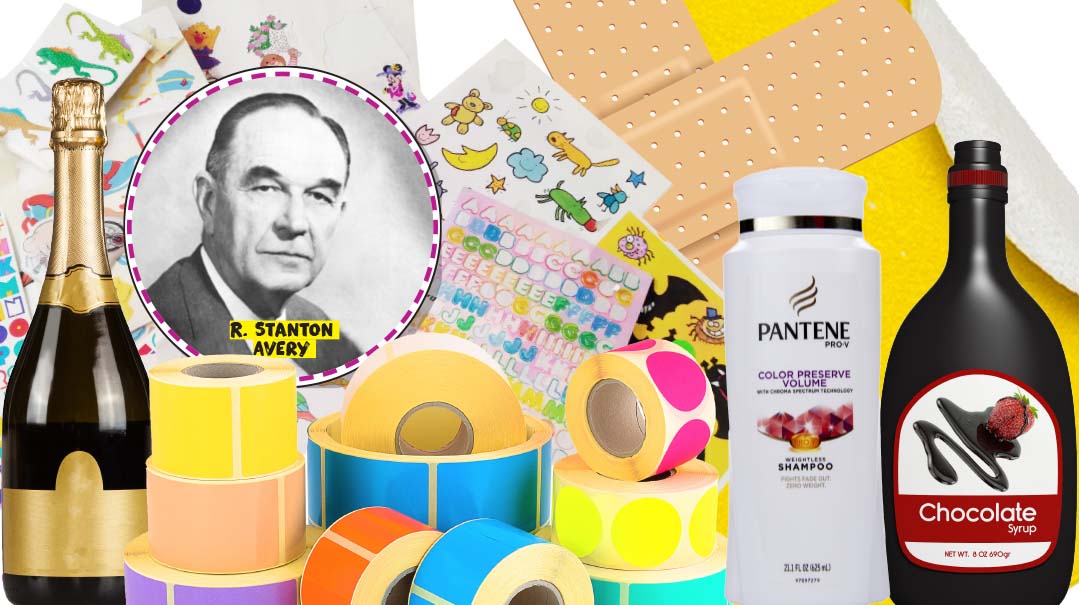
In 1907, in Oklahoma City, a baby was born who would grow up to change the world in a subtle — but, uh, sticky — way. Of course, no one knew it at the time. This baby — R. Stanton Avery — grew up to be a young man who desperately wanted to go to college and escape his life of poverty, but he couldn’t afford it. He rented some living space — actually, it was just a chicken coop, now empty of its avian inhabitants — and got himself a job. Little by little, he saved money, and eventually managed to put himself through college.
In 1935, he had an idea. A good one. But he needed money to try it out. His fiancée, Dorothy Durfee, gave him $100 (which was a lot back then) to use toward his invention. To start, he assembled a motor from a washing machine, parts of a sewing machine, and a saber saw. I personally wouldn’t have a clue what to do with those, but Mr. Avery managed to use them to invent a machine that made self-adhesive labels. In other words, he invented stickers as we know them (other stickers at the time needed to be moistened before sticking them on, like lick-and-stick stamps). His stickers were also the first that could be cut into any shape.
His original company, Kum Kleen Products, was soon renamed Avery Adhesives and has been operating since 1936. He developed all kinds of adhesives, including some that come off easily; he also invented better backing sheets, and other things. He patented 18 inventions.
You’ve surely seen the self-adhesive labels with the Avery brand name and logo, even if you never noticed it before. The company also makes labels for commercial products (like the sticker labels on your shampoo bottle and other products) and stickers for cars. They’re also one of the main suppliers of the US Postal Service’s self-adhesive stamps. Now known as Avery Dennison, the company is valued at over $6 billion.
Create a free account to keep reading.