Because deference defeats deterrence
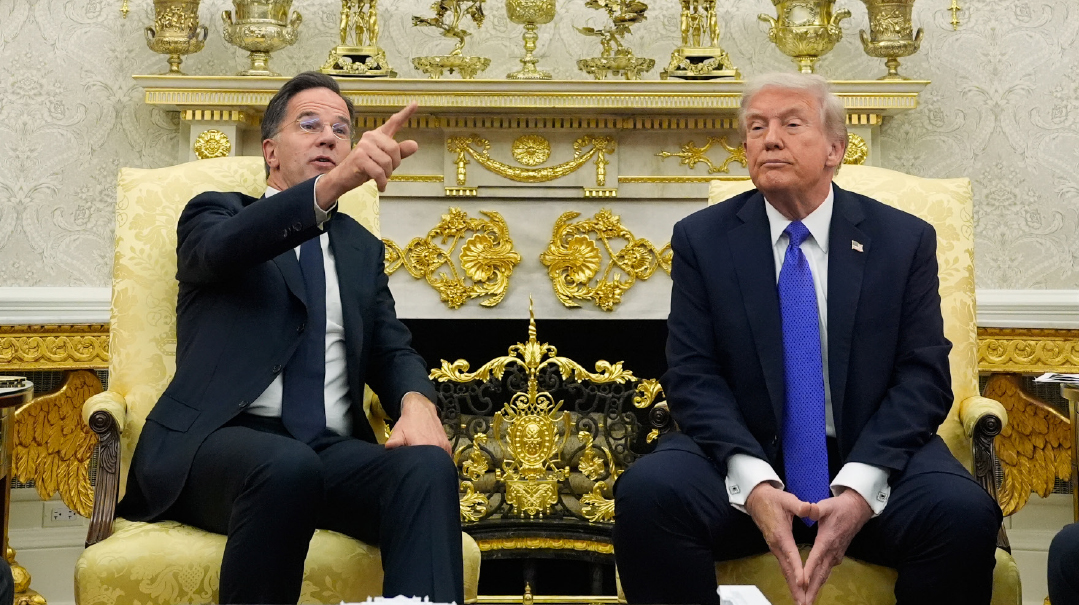
President Donald Trump listens as he meets with NATO Secretary General Mark Rutte in the Oval Office (PHOTO: (AP PHOTO/ALEX BRANDON)
NATO’s Secretary General Mark Rutte didn’t fly to Washington to negotiate with the United States. He came to surrender; gracefully, diplomatically, and with a smile wide enough to hide the tremor in his alliance’s voice. Recently, NATO’s European capitals have come to terms with the fact that they face two stark choices: learn to do things Trump’s way, or learn to do them in Russian. Faced with that binary, the alliance decided it would rather embrace the route that involves less borscht.
The new Secretary General’s mission was about symmetry over summitry, and to ensure that NATO’s reflection matched the mood in Washington. Instead of showing up with red lines, he arrived with a carefully folded white flag. In a gaggle with the White House press corps outside the West Wing entrance, Rutte said his Oval Office visit was to “support President Trump’s vision of ending the killing in Ukraine,” and how he might help “ensure that Putin accepts the president’s view.” He even emphasized the pressure he’d been applying on Spain, the lone holdout against Trump’s new requirement that members contribute five percent of their GDP. The NATO chief sounded less like strategic doctrine and more like fan mail.
For a president famous for moving fast and breaking norms, the new Trump doctrine is surprisingly still, a ceasefire philosophy powered by inertia. This requires both sides to cease fire and launch negotiations. Rutte repeated it verbatim, confirming that the ceasefire philosophy once dismissed as naïve is now the northern alliance’s north star.
Create a free account to keep reading.