There’s nothing like speaking to diplomats and foreign journalists in their own jargon. In ancient Persia, Mordechai’s knowledge of seventy languages played a crucial role in saving the Jewish People from genocide. And while there is no overt decree of annihilation today, the role of foreign languages is as important as ever for Israel in dealing with a hostile world media eager to paint it as a nation of oppressors at best, brutal killers at worst. In these tough times, it pays to speak their language.
By any standard it’s a tough time to be sticking up for Israel on the international stage. Hasbarah (public relations) professionals will tell you that defending Israel to the international community has never been an easy task but the challenges of 2011 are more daunting than ever. In Europe many universities have become off-limits for Israeli speakers and in South America Iran’s growing influence has pushed several countries to ramp up their credentials with the ayatollahs by declaring their recognition of a Palestinian state in Judea and Samaria. Closer to home much of the Arab media is committed to portraying Israel in the bloodiest most graphic terms imaginable.
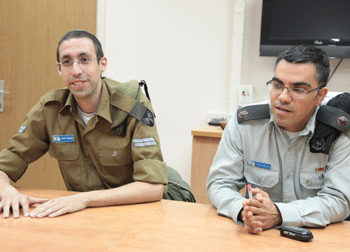
In discussing these challenges Mishpacha gathered together Major Avichai Adraee IDF spokesman to the Arabic Media; Corporal Motti Schnitzer a native of Antwerp who serves as an IDF liaison to the French Flemish Dutch and German media; and ___ Roni Kaplan a native of Uruguay who serves as the army’s point man for Latin America and Africa.
Motti Israel’s position today in Europe is tough to say the least. What are some of the challenges of your job?
Motti Schnitzer: I’ve got an MA degree in Media Communications and I worked for several years in sales and marketing. But when I made aliyah a couple of years ago I felt it was my duty to use my skills to contribute something to the country and to the Jewish People. As the IDF liaison to the foreign media in the languages I speak I’m in daily contact with foreign reporters. It’s important for two reasons: First when an army spokesman can speak to foreign reporters in their own languages it shows a level of professionalism on the part of the army. And although I speak English and so do most of the foreign reporters there’s a different level of communication when you’re speaking in a reporter’s native language. You don’t miss the nuances and you get all the cultural references right. It helps prevent any misunderstandings between the army and foreign journalists.
Create a free account to keep reading.