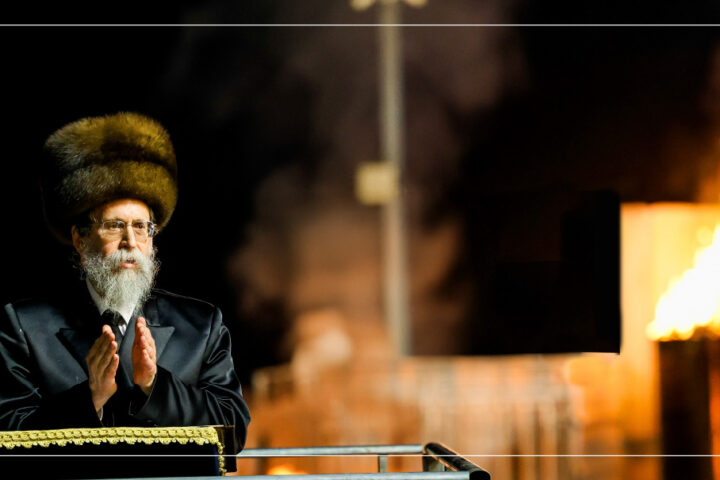
“In place of a sefer Torah,” he told the group, “let us carry this child, who represents the future of the Jewish people”
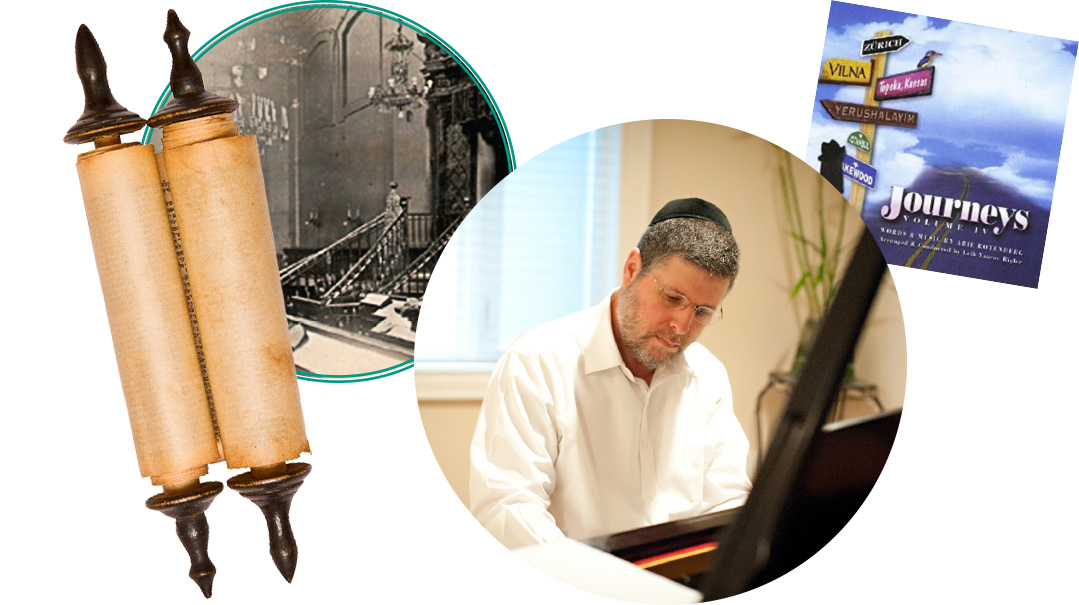
Through the haunting blend of the piano’s soft tones and Abie’s raw emotion, one is transported into a bygone world, as seen through the eyes of a war refugee, inspired by the real personality of Rabbi Leo Goldman. Both dread and joy are felt as the song takes its audience on an emotional journey together with war survivors returning to Vilna, looking for some familiar faces. The group of bedraggled refugees realizes that it’s Simchas Torah, and making their way to the old shul, find chaos, destruction, and murder. Yet through the slow and somber sounds of devastation and unimaginable loss, we join them as they discover precious reasons for optimism and rebirth.
Mrs. Rose Brystowski, daughter of Rabbi Goldman
Before World War II, my father was a yeshivah bochur who lived in the town of Koritz, which was then in Poland, near the Russian border. The Russians took that area early in the war, and he was drafted, becoming an officer in the Russian army. A severe wound in the early months of the war meant that he was sent to a hospital in Uzbekistan. There, he met my mother, a Lithuanian refugee, and they married. His wound never healed properly, which actually kept him alive, because the Russian army discharged him from active service.
In the aftermath of the war, my parents made it out of Russia, across the Soviet conquered territories, into Vilna. They were in that city over the Yom Tov of Simchas Torah in 1946, and were drawn to what remained of Vilna’s Great Synagogue. It was a shell of the formerly grand shul, and of course, it had no sifrei Torah, yet the Jews who had gathered there stood in the ruins, prayed the Yom Tov davening and held hakafos. Among the ragtag group of soldiers, refugees, and survivors, my father saw a child, standing hunched on the side. He approached the man who stood near the little boy and asked him if the child was Jewish. “Yes,” was the answer.
My father could hardly believe it. My parents had just traveled thousands of miles, passed through the devastation of countless communities, but he had not caught sight of one Jewish child in all the months of his travels. He asked the father’s permission and picked up the child, holding him close in his arms as he danced. “In place of a sefer Torah,” he told the group, “let us carry this child, who represents the future of the Jewish people.”
Create a free account to keep reading.