Rav Chaim Epstein understood that his role as rosh yeshivah was so much more than saying deep shiurim. It was about transmitting the treasure he himself received, about taking the talmid by the hand and teaching the sacred steps that are at the very core of high-level study.
T
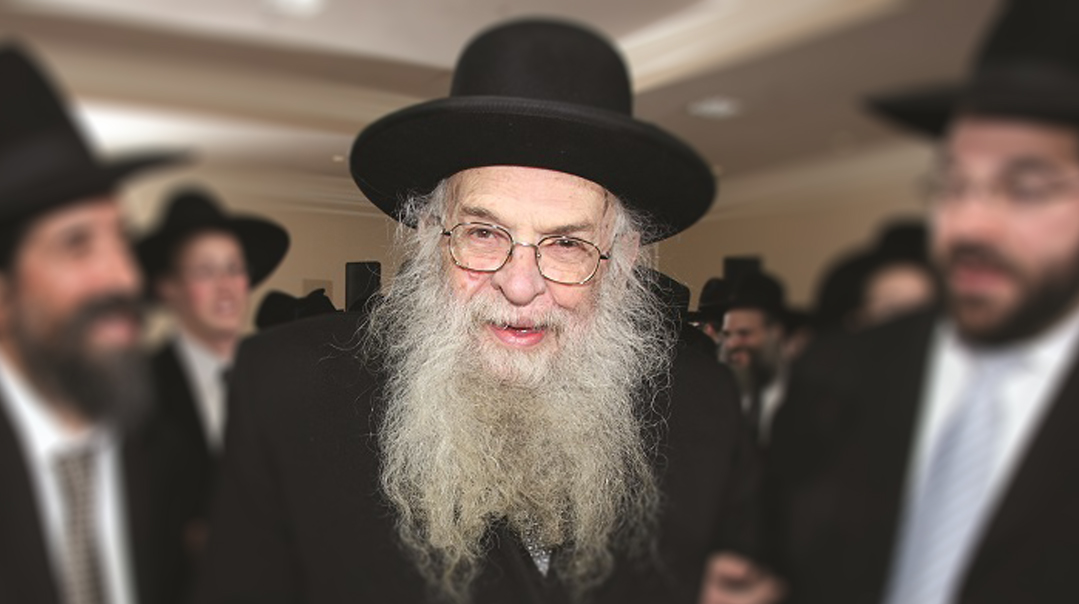
he slim black sefer that began appearing on tables and bookshelves in yeshivos in 1973 was something of an anomaly. Bearing the simple title Iyunim B’chiddushei HaRashba, it was not the typical sefer of shiurim that one expected to see from a rosh yeshivah, although it had been written by one. Rav Chaim Epstein, rosh yeshivah of Brooklyn’s Yeshivah Zichron Meilech — whose passing last week after an illness at age 79 left behind a gaping void in the Olam HaTorah — had written an innovative work that took the talmid by the hand, so to speak, and taught him a skill at the very core of the high-level Torah study that pulsates within yeshivos everywhere: How to read closely the words of a Rishon — in this case, the Rashba — and decipher untold depths in his every word.
The letter of approbation appearing at the front of that sefer was also quite striking. In his enthusiastic haskamah, the towering gadol of that time, Rav Moshe Feinstein ztz”l, had expressed his delight that “even in the new generation, true gedolei Torah have arisen.” Rav Chaim was only 38 when those words were written. Despite this, when asked to be mesader kiddushin, he called Rav Moshe with his quandary, “How can I be mesader kiddushin when I don’t even have semichah?” To which Rav Moshe replied, “Reb Chaim, if not you, then whom? I hereby give you semichah over the phone!”
Rav Chaim’s sefer was a classic expression of what he saw as his role, as one of the leading talmidim of Rav Aharon Kotler ztz”l in Lakewood — not just harbatzas Torah, but mesiras haTorah, serving as a next link in the generational chain of Torah transmission. There are maggidei shiur and roshei yeshivah, and then there are those who merit the illustrious title of maatikei hashemuah, those who pass on that which they themselves received, the process of how to approach Torah and how to learn it, and guide their talmidim through that process, step by sacred step. Rav Chaim was very much of the latter category.
A second sefer he published in 1978 under the modest title Iyunei Torah, featured a further departure from a standard sefer of lomdus — a multi-page introduction that used a plethora of sources to deeply explore the uniqueness of the purely spiritual creation called “Torah,” entirely distinct from all secular forms of wisdom. With this essay, Rav Chaim sought to initiate young bnei Torah into an understanding of Torah study as Creation’s very raison d’être, which had been the overarching theme in the Lakewood beis medrash of Rav Chaim’s great rebbi. Never in a half century did Rav Chaim stop transmitting, reaching into the storehouse of his rebbi’s fabulous riches of Torah and yirah and handing the same down to his own talmidim.
Create a free account to keep reading.