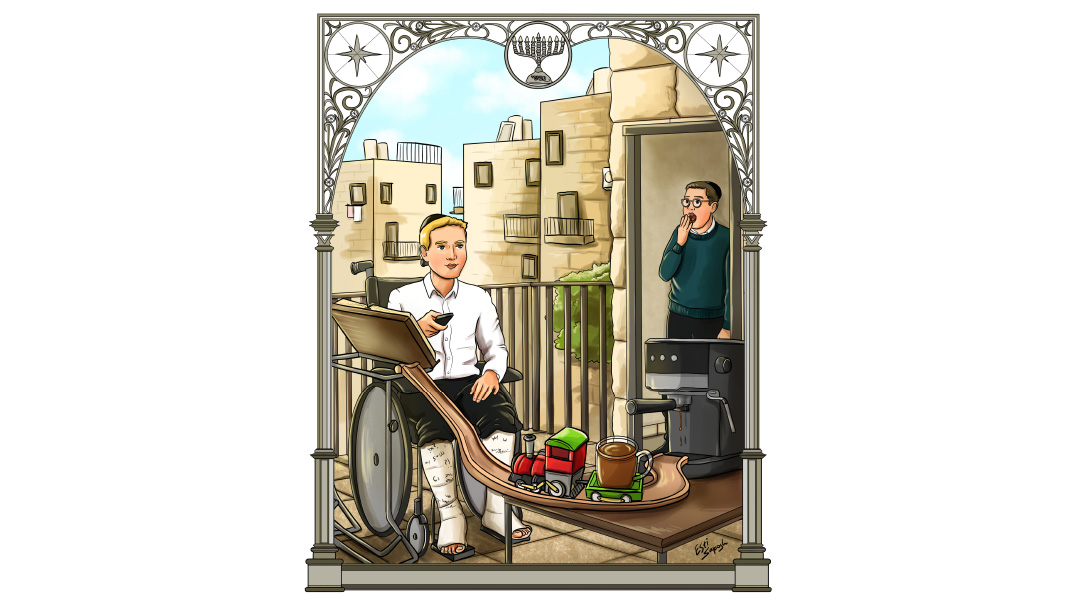
She looked down at the canvas, moving it in the moonlight until she could see the image it held

The day he decided he would need to do miniatures was the same day Mama said they couldn’t afford supplies and Papa said they couldn’t store any more large canvases. Yankel wasn’t surprised. He knew funds were tight. And he knew Papa didn’t appreciate his art. “It’s not going to put shoes on your feet,” he would say. But of course he would say that. Papa was a shoemaker, ever practical.
Yankel decided that if he made miniatures, he would be able to continue, both from a cost perspective and a storage one. There was also the matter of his rebbi, who didn’t really appreciate Yankel’s art at all. You should be learning, the rebbi would say. What Yankel knew but wasn’t able to explain or even put into any words, was that creating art helped him understand Torah. When he was drawing or painting, sometimes the words of the Gemara would just become clear.
What Yankel really wanted to paint, and which he would now do in miniature, was his Alter Zeidy. But he wouldn’t paint him sitting in front of a sefer, which is what he did almost all the time. He would paint him playing the violin. Because when the Alter Zeidy would get a fiddle in hand and bend his chin to it, stroking the strings with the bow, he seemed to be flying up and away, out of this world.
The Alter Zeidy once told him that when he was playing the violin, everything became clear to him, that he could see emes, clear as day. The Alter Zeidy said that when he played, things made sense. That was what art did for Yankel. He was fortunate, at least, that he could make some miniatures. The Alter Zeidy had never owned a violin.
Create a free account to keep reading.