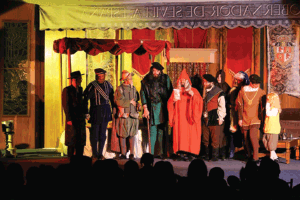
There is an old tradition among the chassidim of the Hungarian and Romanian courts to stage a yearly Purim shpiel — replete with professional-level costumes music and script. These were no amateur productions — they were a major attraction drawing audiences of hundreds and even thousands: The Achashveirosh Shpiel Dovid un Golias Shpiel Akeidas Yitzchak Shpiel Avraham v’Sarah Shpiel Hamelech Shaul Shpiel Chachmas Shlomo Shpiel Der Ashmadai Shpiel and Moshe Rabbeinu Shpiel were all based primarily on midrashim and other accounts from Chazal but also featured satire and humor in keeping with the spirit of the times. Although these shows were sanctioned and actually encouraged there was often a swirl of controversy surrounding what some considered sacrilege. One year a particular community was so enraged by the comical mocking way the heroes of the Purim story were presented that they burned the script. But that didn’t stop the Bobover Rebbe Rav Shlomo Halberstam ztz”l from commissioning a Purim shpiel of his own in 1948 a year after arriving in the US. He had survived the Holocaust together with his son Naftali Tzvi on the wings of miracles and he now served as a magnet for other broken survivors yearning to rebuild their lives. It was Erev Taanis Esther when the Rebbe — who was then living on the West Side of Manhattan — approached Reb Moshe Aftergut a young man he’d originally helped when the two met in a DP camp in Bari Italy in 1945; the Rebbe became Aftergut’s protector and mentor once they both arrived in the US and now Rebbe Shlomo was asking his young protégé to prepare a Purim shpiel in order to revive the age-old custom. The young man agreed not fathoming that the decision was about to change his life. That first production was the beginning of the annual Bobover shpiel on American shores. And that was 67 plays ago; ever since Aftergut has been the creator (and often was also the star) of dozens of annual Purim productions. Many other chassidic courts followed in Bobov’s footsteps and readopted the time-honored custom of the classic Purim shpiel.
To read the rest of this story please buy this issue of Mishpacha or sign up for a weekly subscription