This war, more than ever, has given Jews around the world an attitude readjustment. Because those names, those lists we’re davening for, are us
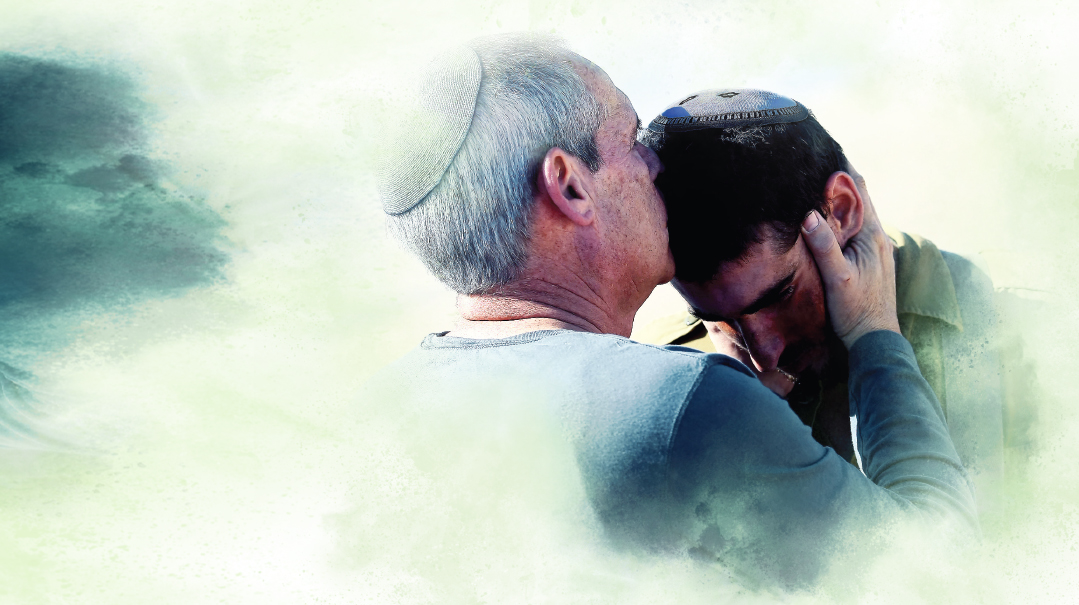
This sunny Friday afternoon, the Landau home in Efrat has the frenetic feel of a day-care center. Plastic plates of Erev Shabbos kid-friendly chicken and rice cover the kitchen table, and several sets of energetic toddlers and babies belonging to married daughters and daughters-in-law vie for attention while an older sister valiantly organizes a playgroup outside on the steps. But this is no vacation kaytana at Savta’s house: It’s more like a companionship vigil. Bracha Landau’s five sons and two sons-in-law have all been called up to the front.
Suddenly there’s a buzz — Bracha’s son-in-law Yonatan, Chana’s husband, is on the phone and everyone jumps. Yonatan, who lives with Chana and their young family in the Negev town of Yerucham, is calling to wish good Shabbos. Hopefully there will be more phone calls from some of the others before candlelighting.
Bracha is the captain of this small empire, but today it feels like she’s steering a ship of uncertainty. She’s proud that the men of her family are serving the country they all love, but like any mother, she’s torn between the needs of her people and the tugging of her own heart.
Bracha, a computer programmer, and her husband Yitz Landau — a chemist for a pharmaceutical company — moved to Israel from Queens in 1992, first settling in Jerusalem’s Har Nof neighborhood and then moving to a large private home in Efrat. They lived through the Second Intifada, the Second Lebanon War, multiple military operations and countless terror attacks. Yet this time, Bracha says, the overwhelm is all-encompassing.
Create a free account to keep reading.