Rav Reuven Leuchter unravels the secrets of Nefesh HaChaim
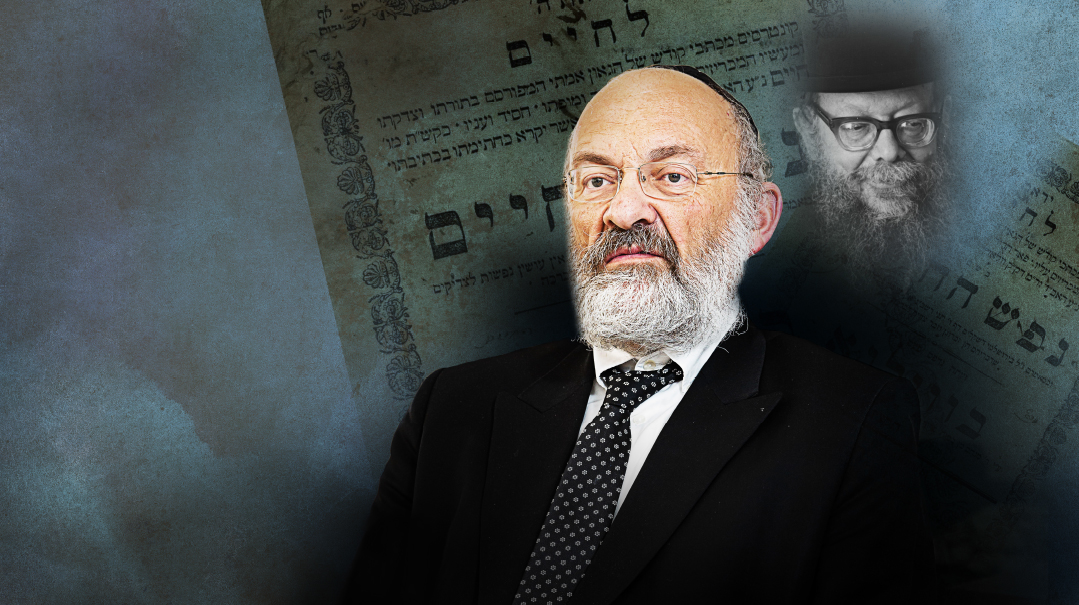
And that’s in no small measure thanks to Rav Reuven Leuchter, whose illuminating words have been gracing these pages regularly, exposing readers to the depth and clarity of his thought. Rav Leuchter, a primary student and longtime chavrusa of Rav Shlomo Wolbe ztz”l and one of the leading mussar personalities in Eretz Yisrael today with his worldwide network of shiurim and teleconferences, is the author of a Nefesh HaChaim commentary entitled Meshivas Nefesh. He also delivers vaadim on its content, probing with his audiences how the classic sefer can best impact us.
Still, there is much confusion about the sefer and its role, which appeared in 1824, three years after Rav Chaim was niftar. Some maintain that it was written in response to the teachings spread by the chassidic masters. Others wonder whether bnei Torah should be learning more than Sha’ar Daled, the fourth section, which focuses on Torah learning as the central purpose of creation. Perhaps they should also delve into the oft-ignored first three sections, which deal with such Lurianic kabbalistic concepts as Hashem’s infinity and His “tzimtzum,” or “contraction,” to “make room” for a physical world. Is it a mussar work? A Kabbalah sefer? Is it meant to be studied only in part or its entirety?
Rav Leuchter is almost expecting the questions; he tells us that most people encountering the sefer are wondering about these very same things — perhaps because of the sefer’s historical context. In 1772, the rabbinic and lay leaders of Vilna announced a cherem on the new chassidim, the followers of the Baal Shem Tov’s disciples. The Vilna Gaon himself penned a scathing public letter about them.
But Rav Chaim’s Nefesh HaChaim, which actually deals with many of the same kabbalistic issues as the Tanya, contains no explicit mention of chassidim or any chassidic texts, even though both seforim work through similar theological concepts (although, for example, it’s not hard to decipher the target of Rav Chaim’s criticism of those whose spiritual preparations for prayer lead them to pray long after the halachically mandated time).
Create a free account to keep reading.