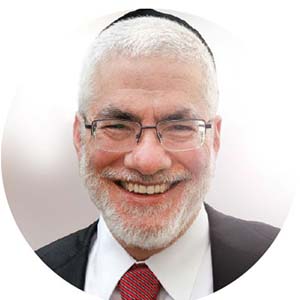
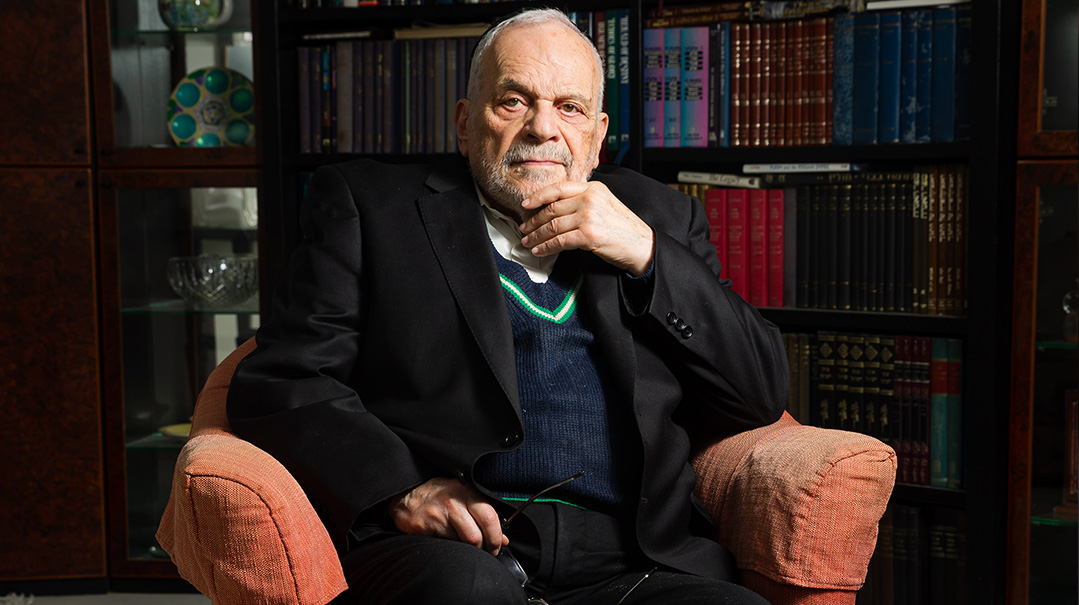
Rabbi Berel Wein hasan unquenchable love for the greatest saga of all time: the survival of his people
Photos: Elchanan Kotler, Family archives
Ihave discovered the perfect cure for anyone who finds fast days difficult: Sit down with Rabbi Berel Wein for as many hours as you want, and let him take you on a panoramic tour ranging from Jewish history to the current scene. I can guarantee that you will soon forget about the fast entirely, and the hours will roll by. I know because that is how I spent several hours this past Taanis Esther seated with Rabbi Wein at his living room table.
Both Rabbi Wein and I would identify ourselves as Chicago natives, though there is a difference, as Rabbi Wein himself once pointed out. Over 15 years ago, I had the honor of introducing him at a pre-Rosh Hashanah program at Lincoln Center’s Alice Tully Hall, and I noted that though his “Chicago accent” is world famous, through over 1,200 recorded tapes, I don’t recognize it as the same as mine.
Rabbi Wein replied, “Jonathan isn’t from Chicago He’s from the suburbs.”
As we talked, inter alia, about what a wonderful place Chicago was to grow up in, I realized how much wisdom was contained in the remark. Rabbi Wein lingered over each of the old litvishe rabbanim under whom he studied, including his maternal grandfather Rabbi Chaim Zev HaLevi Rubenstein, who was one of the founders of Hebrew Theological College, the first yeshivah in the Midwest; Rav Mendel Kaplan; Rav Chaim Kreiswirth; Rav Mordechai Rogoff; and his father, Rav Zev Wein. He is still nostalgic for the old West Side, from which all the Jews fled over a period of four years, with only six (two of which became “traditional” — i.e., separate seating but no mechitzah) of the 42 shuls that had dotted the neighborhood successfully moving to new neighborhoods. In short, Rabbi Wein lives with a sense of place that no suburban kid carries with him.
Create a free account to keep reading.