With locked shuls and frayed nerves, is there a future for the Jews of Caracas?
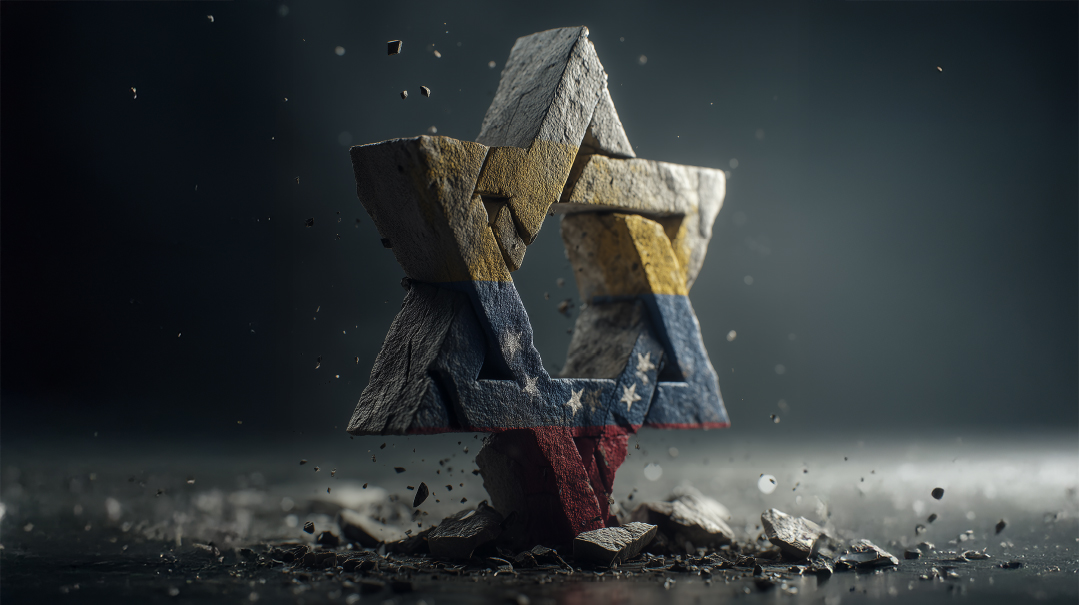
This past Motzaei Shabbos, the Cohen family went to sleep after the seudah in their home in Caracas, Venezuela, without imagining that they would wake in the middle of the night to a bombing carried out by more than 150 aircraft from the United States Air Force.
“We started hearing the explosions around two in the morning, and not knowing what to do, we went upstairs to our neighbors’ apartment,” Iosef Cohen told Mishpacha (his name has been changed at his request, for security reasons). “Things calmed down around four in the morning, and only then did we go back down to our place,” he said — unaware that at that very moment, Venezuela’s dictator, Nicolás Maduro, was aboard the amphibious assault ship USS Iwo Jima, en route to US territory, after being captured along with his wife, Cilia Flores, in an operation few could have imagined.
On Shabbos morning, there was not a single active minyan in Caracas. All synagogues were closed, and virtually no civilians went out into the streets until Sunday morning, when a few people — including Cohen himself — ventured out to buy basic supplies.
“No one in the community is going out, except to buy whatever they can find,” he said. “It’s more uncertainty than fear — about what might happen next, about how this will continue. People are worried about shortages of food, fuel, basic necessities.”
Create a free account to keep reading.