While his concerts attract capacity crowds from the entire spectrum of Israeli society and his albums have gone gold, he still only wants to sing about the Borei Olam
Perhaps nothing reflects this more than a clip of a heartbreaking visit by Ribo to the shivah of 21-year-old soldier Amit Ben Yigal, killed in an overnight anti-terrorist raid in a village outside Jenin in May 2020. Ishay didn’t know the family, but one thing he did know: This is the broad swath of Israeli society that’s under the radar — people who believe, have faith, and want to connect, even if they are unlearned and not strictly observant.
Ribo sat in a circle with them and sang “Halev Sheli,” his mega-popular song about how only Hashem can heal a broken heart, bringing Amir’s parents to tears as they and other non-religious visitors joined him in singing the words of hope and healing that they all knew. Baruch Ben Yigal told Ishay that Amir, who was his only child, had selected “Halev Sheli” as the ringtone on his phone.
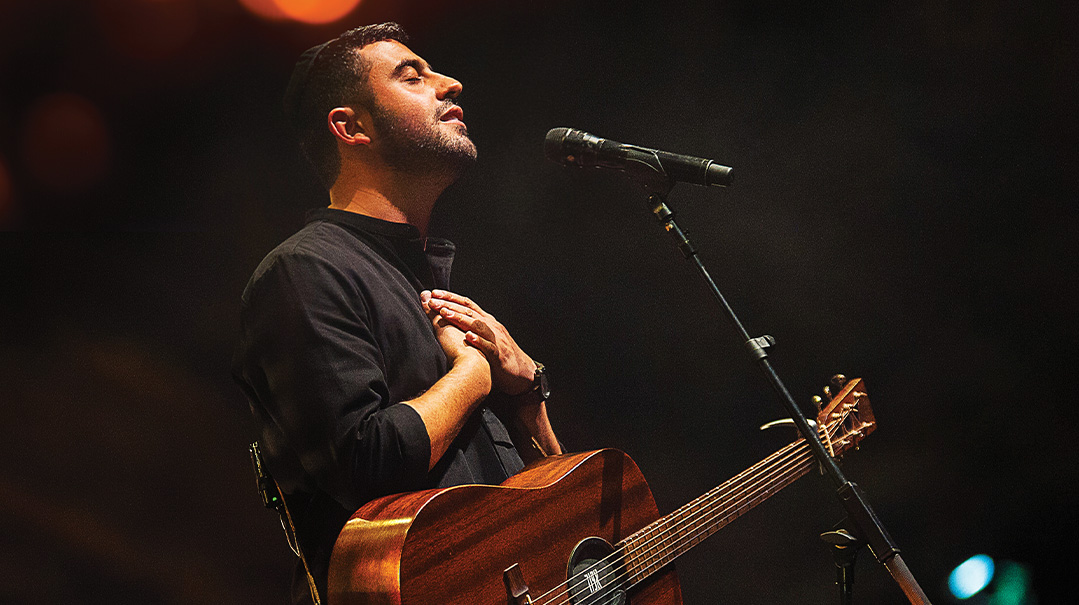
Ishay Ribo, 33, never set out to be a national ambassador of faith when he began writing songs as a teenager, but still, he was careful only to write songs of kedushah, of HaKadosh Baruch Hu, emunah, hope, and redemption. And today, his mix of spiritual lyrics culled from Tanach and midrashim, packaged in powerful, inspirational melodies, has managed to break down sectarian barriers. His prominent black yarmulke and long tzitzis notwithstanding, his concerts attract capacity crowds from the entire spectrum of Israeli society, he has won prestigious national music awards, his four albums have gone gold and platinum — and he still only wants to sing about the Borei Olam.
“Music is a great connector, from a higher place,” he says, explaining that every concert is like a mission to open hearts, because he really believes that he can get a message across to a public Hashem hasn’t given up on. “Not-yet-religious people come and feel their souls stirred. People have told me, ‘I’m not religious, but I won’t listen to your songs on Shabbat.’ The truth is, when I started out, I never dreamed that, with the types of songs I sing, secular people would come to my concerts. But so many people have told me, ‘Ishay, you’re the only connection we have to spirituality.’”
Create a free account to keep reading.