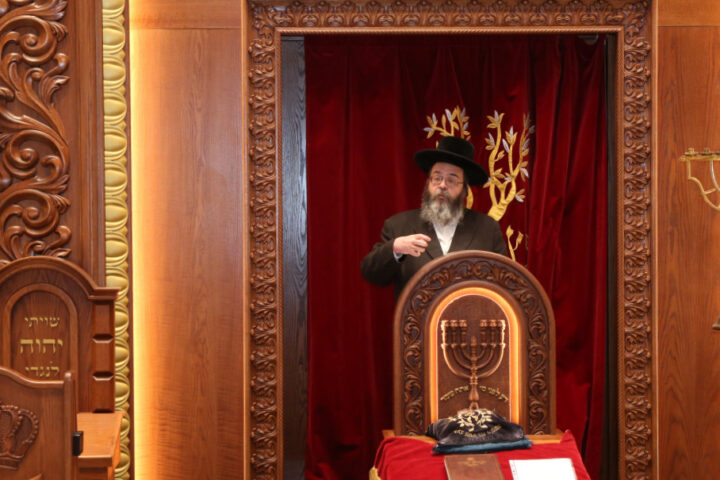
If SIMCHA LEINER is the one serenading the young couple down, you’re in for a treat

While his vocals have accompanied hundreds of chassanim and kallos, Simcha was long considering sharing the magical moments in an album of chuppah music. He travels to weddings all across the world, the families ranging from chassidish to all-American, contemporary music followers to classic niggun fans. Working on this project during the quiet seasons, he came up with the idea of producing distinct chuppah medleys of all these different styles. The album, called SHEVA: Seven Chuppah Experiences, evolved into seven sets, including an Israeli medley, a “hoiche” [elevated] medley, and a chassidish medley. Each one includes a song selection for the chassan to walk down to, one for the kallah’s procession, a “Mi Adir,” a “Mi Bon Siach,” and an “Im Eshkacheich.” There are common favorites like “Pnei Le’Elbon,” “Yedid Nefesh,” and “Vehayu Limeshisa,” and a traditional “Mi Bon Siach” of debated origin, which Leiner calls, “Adam Harishon’s Mi Bon Siach song.”
“Now, more than ever, people love crossing genres,” Simcha says. “Yanky Daskal’s ‘Liros Banim,’ which I’ve selected for the hoiche medley, is sung at Modern Orthodox weddings, and heimish chasunahs are singing the very yeshivish ‘Ki L’Hashem,’ which Rav Shmuel Brazil composed many years ago — that song is on its sixth life. At one point, at chassidishe simchahs they were dancing to the Miami Boys Choir’s ‘Adon Olam.’”
The variety of moods reflects a month in the singer’s life. “I can do a real heimishe chasunah one night, yeshivish style the next, and the next could be a chassan and kallah who aren’t religious, but their families want Jewish music at the chuppah,” he says.
The album has had the strongest reception of any of Leiner’s recent releases, its listener base not relegated to one particular circle. The first six medleys feature genuine orchestral music, reminiscent of the early Project Relax albums, which Leiner sung together with Baruch Levine. One businessman commented that on a flight to Los Angeles, he’d listened to Sheva two and a half times, calling it his “therapy for the week.”
Create a free account to keep reading.