The results of this week’s midterm elections will be widely read as a referendum on President Obama’s first two years in office, even though he was not on the ballot. If anything, the polls revealed an American public in a grumpy mood, especially compared to Inauguration Day in 2008, when six out every seven Americans declared themselves to be optimistic about the next four years with President Obama at the helm. Mishpacha analyses the new mood of the electorate, and what it spells for the next two years.
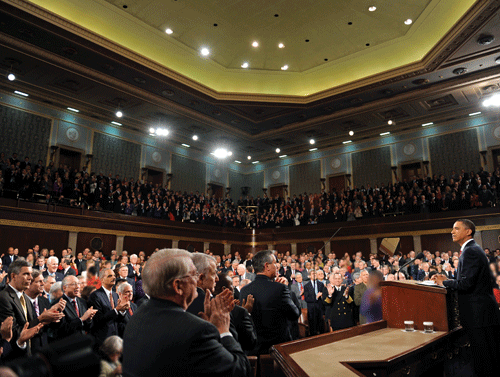
To phrase the question only in terms of what went wrong for the Democrats is somewhat unfair. In a very real sense the Democrats are the victims of their own successes. President Obama and congressional Democrats read the 2008 election as a mandate for a dramatic restructuring of American society and to a large extent they succeeded in doing so.
The President was quite correct in describing “ObamaCare” — with its promise of universal health care and a dramatic move towards a more centrally planned health care system — as the culmination of a Democratic dream of nearly seventy years. At the same time President Obama succeeded in overseeing the largest expansion of the federal government since President Roosevelt’s New Deal of the 1930s and steered the United States sharply in the direction of Western European social democracies. Over the past two years the entire national debt — accumulated during the preceding 220 years of American history — has increased by one-third.
But the president misread his 2008 mandate. Some on the political left interpreted the financial and economic collapse in the fall of 2008 as proof of the inherent failure of market capitalism and of the need for a more centrally planned economy. That mood was best captured in former White House Chief of Staff Rahm Emanuel’s widely quoted remark “No great crisis should go to waste.” In other words the administration saw the financial collapse as an opportunity to rush through emergency legislation as Roosevelt did in his first hundred days. But there is no evidence that the American public had similarly committed itself to a radical restructuring of the American economy.
The second reason for the rapid decline in the President’s popularity and that of Congress is that many of the specific policies they pushed were either perceived as having failed or were never popular from the start. “ObamaCare” was unpopular with more than half the public before its enactment and that disapproval has only increased since its passage. During the debate over the $787 billion stimulus bill the public was told that passage was necessary to prevent unemployment from rising above 8 percent. Unfortunately not only did the unemployment quickly reach 8 percent it is now at 9.6 percent. Hundreds of thousands more not listed on the unemployment rolls have simply stopped looking for jobs. Even though the recession officially ended in June 2009 the recovery has proven to be a singularly jobless one compared to previous recoveries.
Create a free account to keep reading.