The final accounts of Telz's last Jewish women
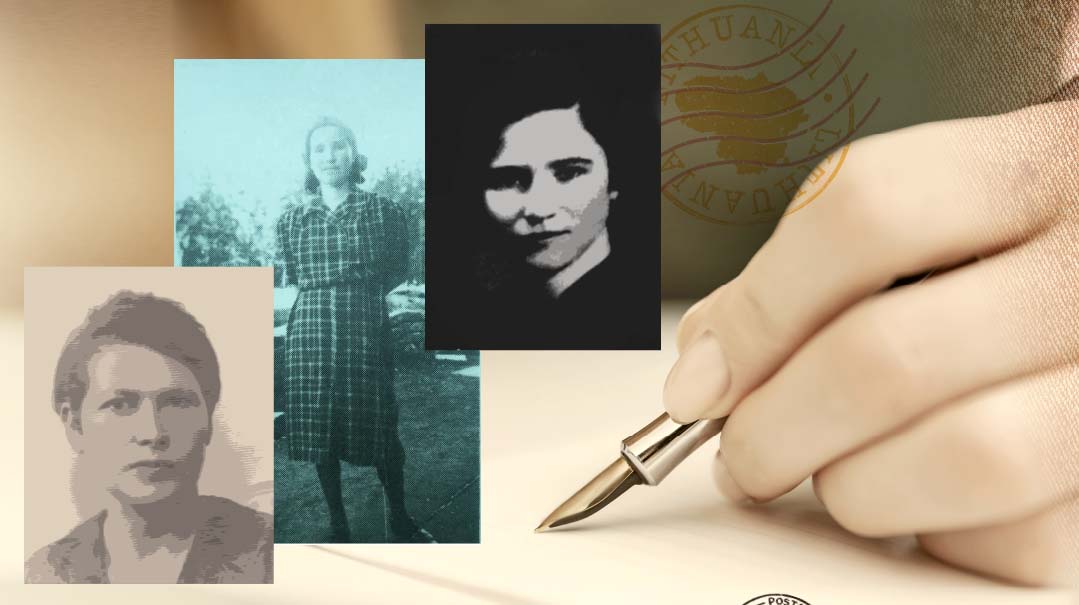
Open each gray file and you’ll find colorless forms and government registers, fragments of newspapers that crumble in your hands. Within each container you’ll discover evidence of lives lived long ago, the silt and sand of the humdrum. But if you lean in closely, within those pallid packages you might hear the whispers of triumph and tragedy that pulse between the lines. Read carefully, and you might even reveal the hidden mysteries of our people, of noble lives cut down in the midst of their glory, stories of unsung heroines that have never before come to light.
My journey through the archives at New York’s Center for Jewish History unfolded in precisely this way. I did not know exactly what might emerge as I requested cache after cache of documents centering on the Holocaust experiences of Lithuanian Jews. My cart, ferried out by an archivist from deep within the library, seemed to be little more than a study in sameness. I had no idea that the contents of those cardboard boxes would cry out to me, in Yiddish and in Hebrew, challenging me to reach further, to dig deeper. Humbly nestled in the midst of thousands of identical cartons stored in the warehouse at 15 West 16th street in Manhattan, the women of Lita were waiting for me to find them and to tell their story.
Because these Litvishe Ladies, as I began to think of them, were like none I had ever encountered. The stories of spiritual fortitude I discovered were interwoven with a level of Torah learning way above common perception, certainly for women of the prewar era. As I would soon learn by piecing together books and newspaper articles from the 1920s and ’30s, these women did not learn in the manner of their Polish and Galician counterparts; Sarah Schenirer’s Bais Yaakov system was foreign to them. But their means of collective study reflected a very high educational standard: They learned, wrote, and communicated in Hebrew, and they were conversant in halachic concepts that one generally assumes were the sole domain of talmidei chachamim. Even their vernacular was laced with the language of lomdus that permeated the Litvishe yeshivah world.
Above all, the devotion of these women to Torah learning and halachah touched my heart. I decided to dedicate myself to the research of these women, individually and as a group. I felt their call to immortalize them, so that they could live on in our hearts and minds, and remind us of the capacity for greatness and agency that lies within each bas Yisrael, indeed within every Jewish soul.
Create a free account to keep reading.