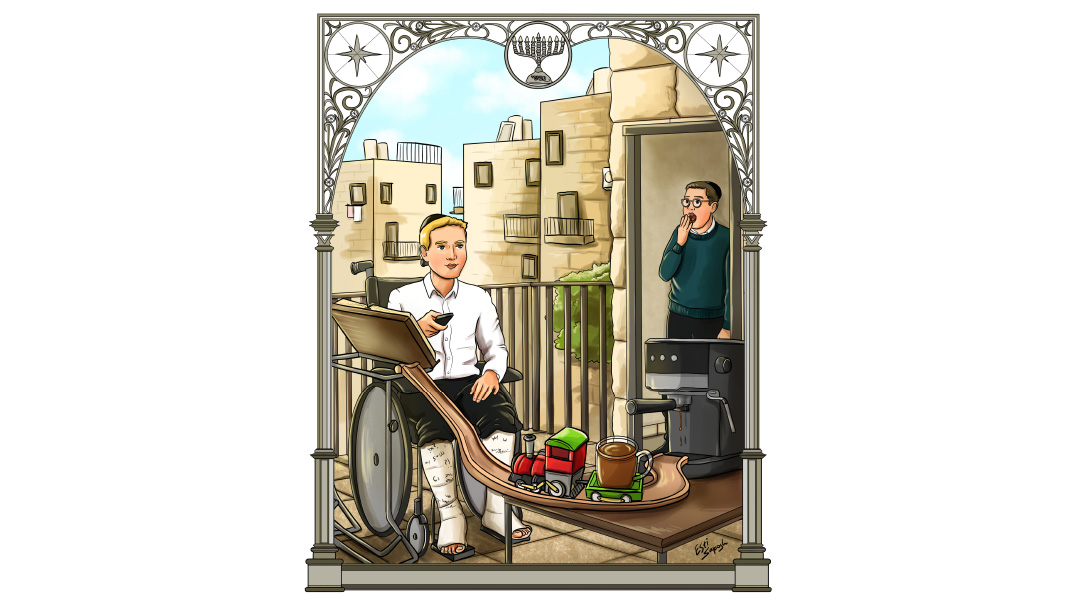
The relationships between these mosdos haTorah and the Oval Office
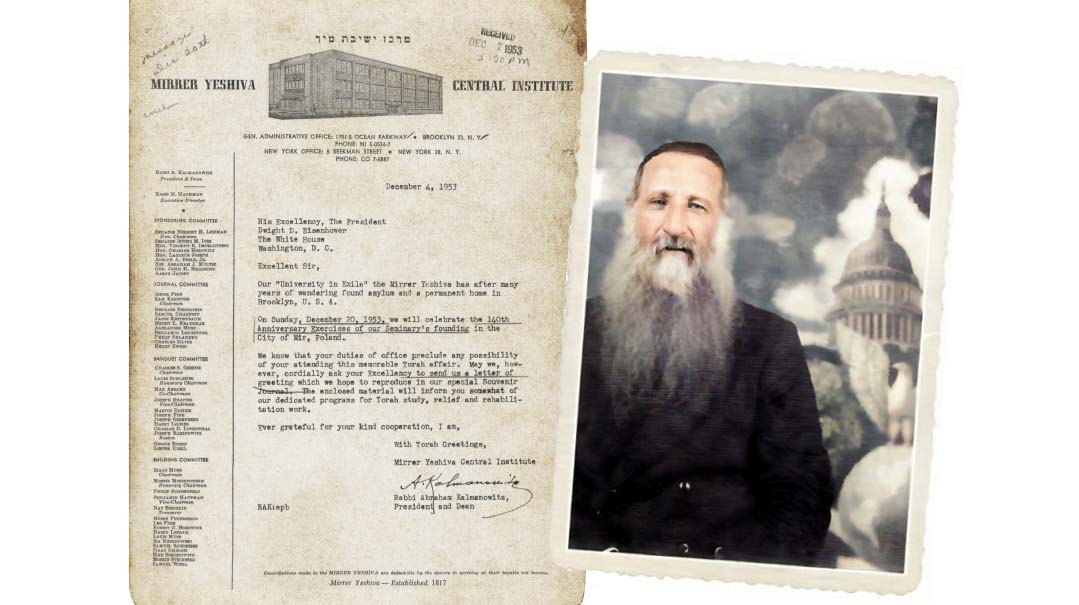
While the mosdos haTorah of 2021 exert tremendous efforts to procure high-quality dinner chairmen and honorees, there was a time and era when much “bigger names” graced the invitations and advertisements for such events. In fact, some of the names that once graced the letterhead of various mosdos are so impressive that they come off as perhaps a bit preposterous.
Is it possible that with the Battle of the Bulge raging in Europe in December 1944, President Franklin Delano Roosevelt had the time to serve as chairman of Mesivta Yeshivah Rabbeinu Chaim Berlin’s “Mesivta Dedication Week”? Perhaps President Roosevelt felt obligated to “pitch in” on Chaim Berlin’s behalf after “personally” penning a “hearty greeting” to the thousands gathered at the 1941 dedication of Mesivta Torah Vodaath, an institution he deemed “the center of constructive activity in preserving and disseminating Jewish tradition and learning.”
In order to better understand the relationships between these mosdos haTorah and the Oval Office, we did some investigating. Were American presidents even aware of the existence of these institutions? How were such letters and greetings obtained in the long-ago days before White House Chanukah parties and Jewish liaisons?
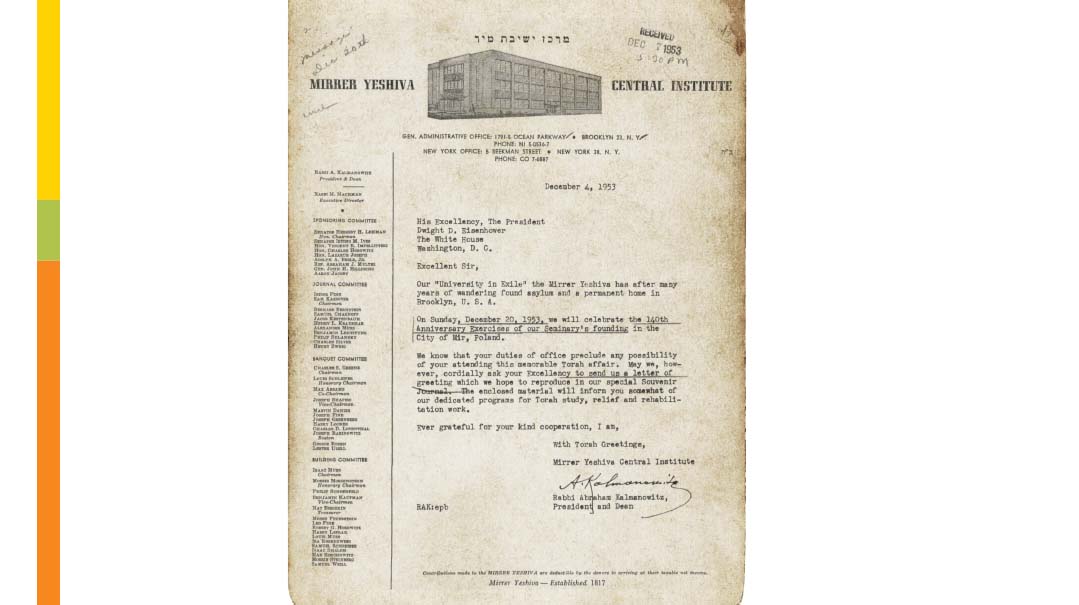
The Dwight D. Eisenhower Presidential Library and Museum is home to perhaps the most enlightening collection of correspondence on this subject. In its archives are lengthy exchanges between the Eisenhower White House and yeshivos such as Ner Israel, RJJ, Yeshiva University, and Tomchei Temimim–Chabad, but the lengthiest file is labeled “22-C: Mirrer Yeshiva Central Institute.”
Create a free account to keep reading.