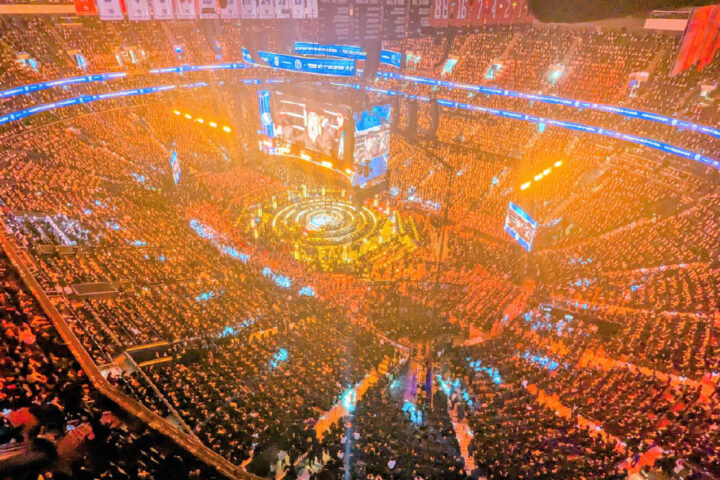
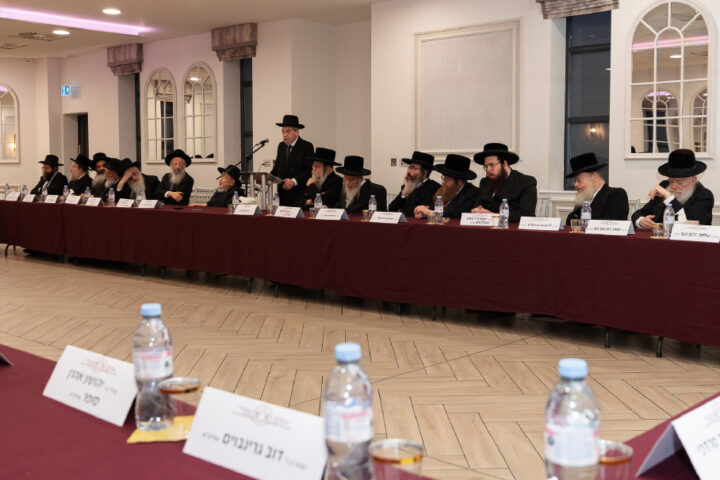
The idyllic shtetl life that made observance possible seemed a distant memory
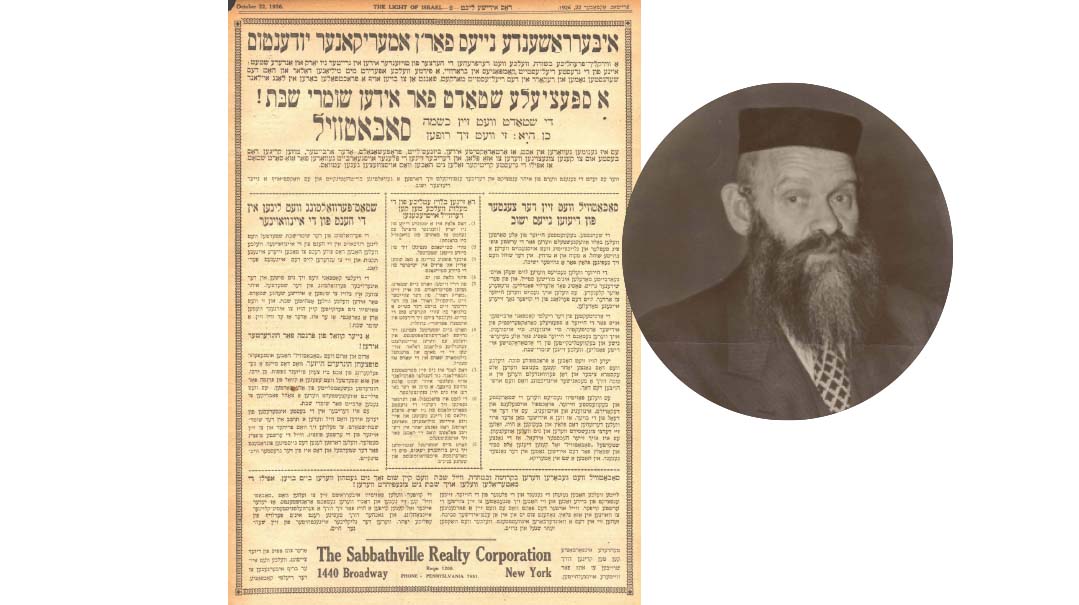
The rapid urbanization and the industrialization of the 19th century led to a rapid decline in Shabbos observance. Jewish workers in Warsaw, Lodz, Lvov, Odessa, Kiev, and other urban centers found the city environment much less conducive to Torah observance than the previous shtetl environment had been. Nowhere was this challenge more acute than in the crowded immigrant neighborhoods of New York City. The combined factors of new country, language, culture, and a drive to “make it” in their new home, made Shabbos observance and other trappings of traditional society fall by the wayside. The idyllic shtetl life that made observance possible seemed a distant memory kept alive only through Shalom Aleichem stories and a few heroic holdouts.
That is, until Rav Shraga Feivel Mendlowitz, the energetic man with limitless vision, stepped onto the scene with a solution to a seemingly intractable issue. If the urban environment is the problem, then perhaps a return to the shtetl could be the solution. And if we don’t have a shtetl handy, then why not build one from scratch? And thus was germinated the idea of creating Sabbathville, USA, home to only committed Torah-observant Jews.
It would be a model Jewish community replete with shuls, yeshivos, and mikvaos to serve the community, and newly built luxurious homes with architectural amenities such as built-in succah rooms and recently invented Shabbos timers. The kashrus scandals that regularly plagued New York would be forgotten in Sabbathville, where kosher butchers of the highest order would be the standard. Lest one fear that it was too distant, its location in Massapequa, Long Island, was billed as “but an hour from New York — which is less time than it takes to go from Brownsville to the Bronx.” Located just a few blocks from the shore, near tony seaside communities that the Jews of the Lower East Side and Brooklyn could only dream of, this was not going to be just any shtetl by the sea.
Though the Sabbathville Realty Corporation was commissioned, and practical steps were taken to bring this bold plan to fruition, it seems that Sabbathville never really made it into a realistic stage, and the ads in Dos Yiddishe Licht are pretty much all that remains. But Rav Shraga Feivel and other likeminded individuals never gave up on promoting Shabbos observance, and their efforts paid off in other ways, as Orthodoxy gained adherents as the 20th century progressed.
Create a free account to keep reading.