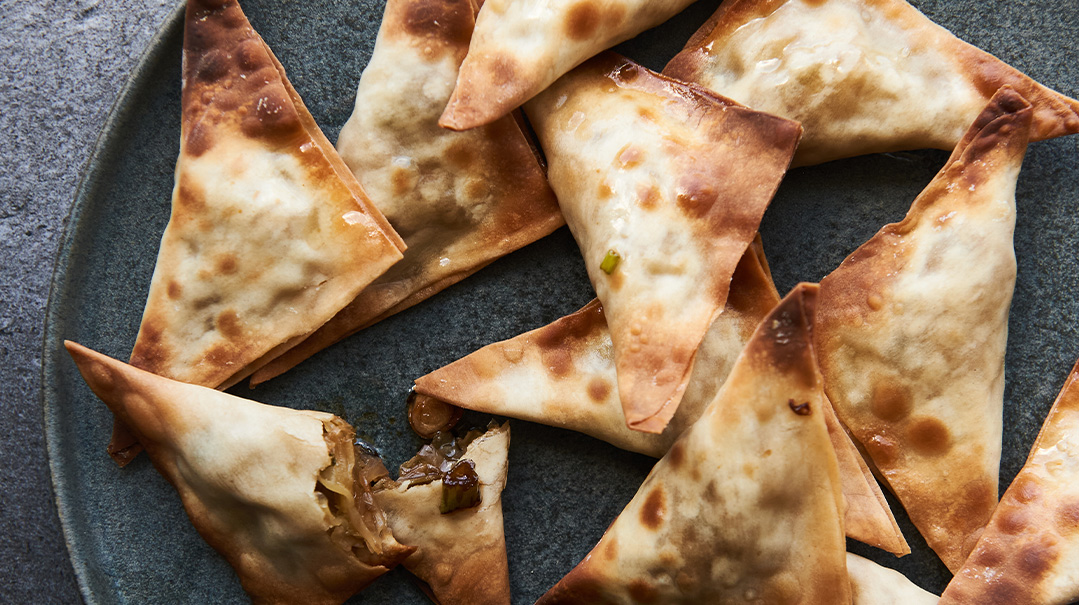
Wonton means “swallowing clouds” in Chinese — but the word comes from Cantonese, not Mandarin.
Wontons are believed to have been introduced to the West by early Chinatown settlers from the city of Guangzhou in southern China.
In Shanghai, the wrapping is flour-based and thicker and whiter than it is in Guangzhou. In China, white is a color associated with death, which is why so few Chinese foods are white.
Recipe by Esther Ottensoser
Wontons have come a long way since they left the soup! Move aside chicken and beef wontons… How about trying salmon?
SERVES 12
Marinate salmon cubes in teriyaki sauce for an hour or two. Place a salmon cube in the center of each wonton wrapper. Bring two opposite corners to the center and then bring in the other two corners to form an envelope.
Heat the oil in a large pot and fry each wonton for 2–3 minutes on each side.
To serve: Plate the wontons in small, rectangular, three-compartment plastic dishes. Place two wontons in either side of the rectangular dish and fill the center with more sesame teriyaki sauce. Place the dish on the upper part of a square plate. Fill the remaining part of the plate with salad of your choice.
Note: For best results, do not freeze the wontons after frying.