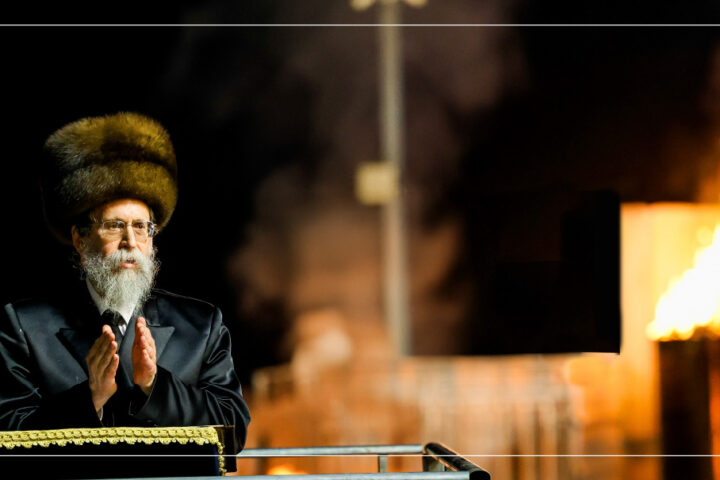
Each one of us must accept upon ourselves our achrayus to be there for Klal Yisrael

 on dry land.” (Shemos 14:16)
Life bumps along with its twists and turns, and the older I get, the more I realize how inexperienced I am. Where once I would’ve have jumped into a difficult situation, confident I knew exactly how to handle it, years of hard-gained wisdom have showed me it always pays to get guidance.
Recently I was faced with a thorny issue that had me stumped. There were a lot of factors, a lot of uncertainties, and people who’d be affected by my actions. Sure, I could decide on my own what I wanted to do, but I wasn’t sure if that was the right thing to do. I discussed it with my husband, and we realized this was a question for daas Torah; specifically, we wanted the advice of Rav Yisrael Ganz shlita.
Rav Chaim Shmuelevitz observes that it was Esther, not Mordechai, who ordered the Jews to fast for three days on Pesach. Since Esther demonstrated exceptional achrayus for Klal Yisrael, she rose above Mordechai and all the gedolai hador, and they all accepted her psak halachah. The hallmark of greatness and leadership is a sense of achrayus.
The problem was a timely one. I needed an answer within 24 hours. No problem. I knew Rav Ganz usually had afternoon hours where he received visitors. However, when calling the house, I got a recorded message that Rav Ganz wasn’t receiving visitors that day.
Create a free account to keep reading.