In Umm el-Jimal they were soon joined by POWs taken captive during other battles, including Gush Etzion and Latrun
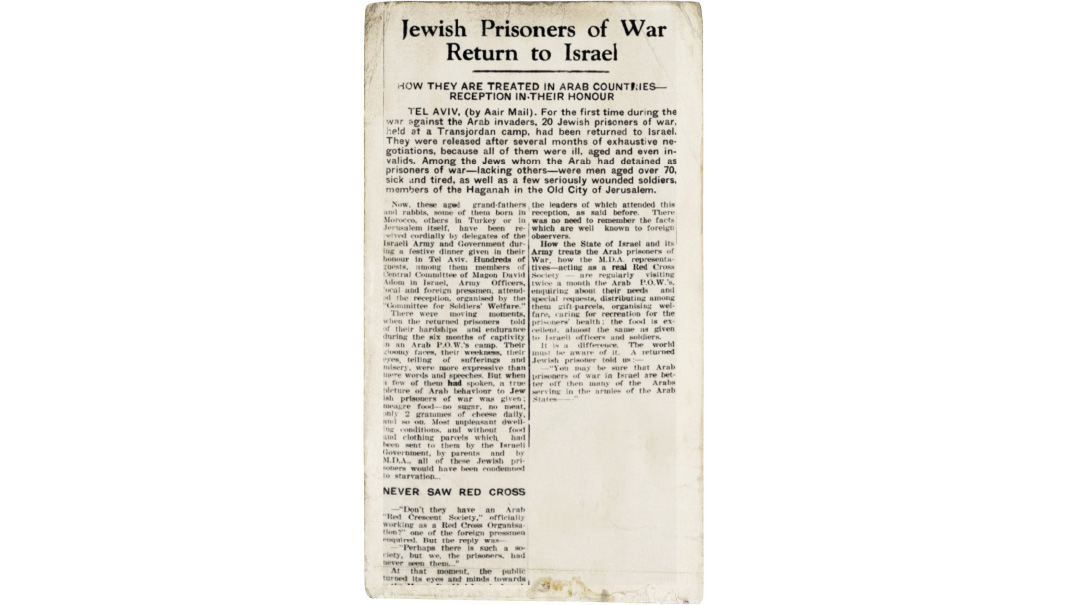
Friday, May 28, 1948, dawned on the Old City of Yerushalayim. The long siege, heavy fighting, and artillery bombardment had finally taken its toll, and the commanding Haganah officer authorized the rabbis of the Old City, Rav Bentzion Mordechai Chazan and Rav Yisrael Zev Mintzberg, to negotiate surrender terms with the Jordanian Legion. Separately, Rav Mordechai Weingarten and another Haganah officer met with Jordanian commander Abdullah El Tell, and the Jewish Quarter came under Jordanian control.
Many civilians, including women and children, were provided safe passage to the western sector of the city still under Israeli control, where they were resettled in the abandoned homes of the Arab neighborhood of Katamon. Approximately 350 fighters and civilians were led under heavy guard to the Umm el-Jimal (Mother of Camels) POW camp near the city of Mafraq in Jordan. Initially the Jordanians planned on taking only combatants; however, upon discovering how few fighters there were, they decided to take civilians prisoner as well.
In Umm el-Jimal they were soon joined by POWs taken captive during other battles, including Gush Etzion and Latrun. At its peak, there were about 700 prisoners interned there. Following the cease-fire agreement negotiated between Moshe Dayan and Abdullah El Tell on November 30, 1948, a group of prisoners were released, with the balance being released in February 1949. The final group of internees brought the camp sefer Torah with them, where it was escorted to its new home in Yerushalayim’s Yeshurun Synagogue amid great festivities. Jordan was the only Arab country that freed Israeli POWs prior to the negotiations and signing of the Rhodes Armistice Agreements.
The Jordanian authorities granted the prisoners autonomy, and an internal leadership was established to manage camp life, discipline, representation to the camp administration, and contact with family back home via the Red Cross. One prominent POW taken during the battle for the Old City was Rav She’ar Yashuv Cohen, later the chief rabbi of Haifa. Son of Rav David Cohen — the Rav Hanazir — Rav She’ar Yashuv attended Merkaz Harav and was a member of the Irgun. In the latter capacity he was severely wounded before being taken into captivity. In his memoirs he described how Rosh Hashanah and Yom Kippur were observed under the close watch of their astonished captors:
Create a free account to keep reading.