A wonderful program of Gemara study called Daf Hashovua
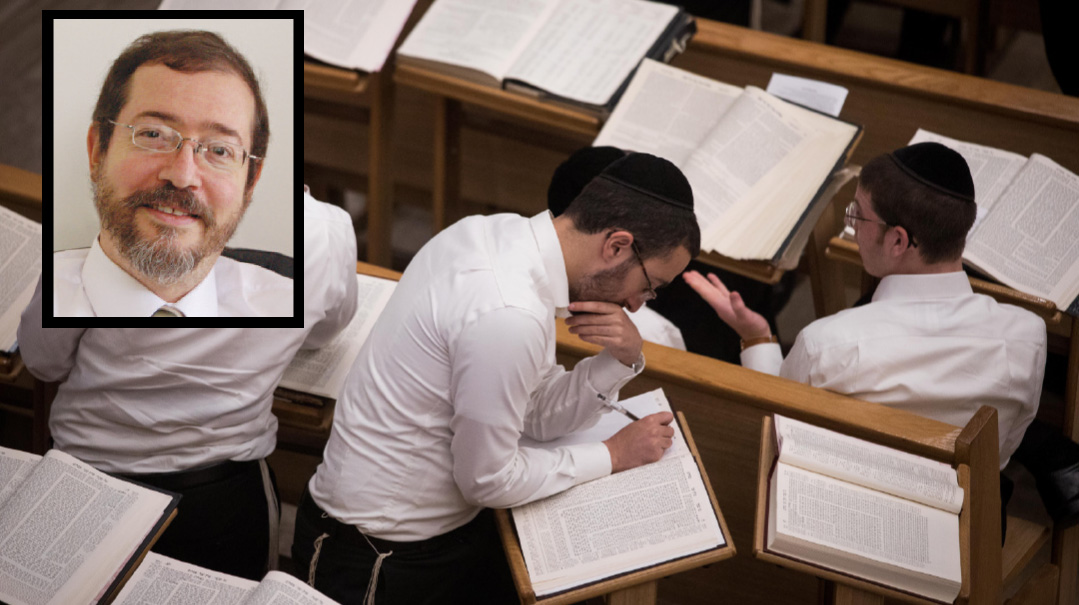
IF you were to take a survey and ask people which times of the year they associate with Torah study, many would obviously answer Shavuos. Others would add Chanukah and Purim too, which have deep links to Torah shebe’al peh. Some sophisticates of machshavah might mention Shevat, when Moshe Rabbeinu began his review of the Torah, as a propitious time for renewed fervor in limud haTorah, or Shemini Atzeres, the “fourth regel,” corresponding to Moshe Rabbeinu himself.
Yet the Chazon Ish is quoted as saying that the month of Elul is a time to invest particular effort to learn lots of Gemara. In the Shemoneh Esreh’s fifth brachah, we make three requests, beginning with “Return us to Your Torah,” continuing on to “And draw us near to Your service,” and concluding with “And bring us back in complete repentance before You.” If we view this as a sequence of supplication, we see that the process of spiritual rehabilitation begins with returning to Torah, renewing and redoubling our efforts to learn and understand the Divine wisdom it contains.
The first step in repairing and strengthening a relationship is, after all, to make a concerted effort to understand how the other party thinks and what he or she truly wants. In contemporary idiom, this is called knowing where the other “is coming from.” Well, as the pasuk states, “Hashem m’Sinai ba.” Sinai — that’s where He’s coming from.
Hashem’s rendezvous with humanity reaches the height of closeness at this time of year, in the hope His proximity to us will spark our desire to respond in kind. And one of the best ways to do so is by seeking to discern His Will, what He really wants of us, as conveyed in the Torah.
Create a free account to keep reading.