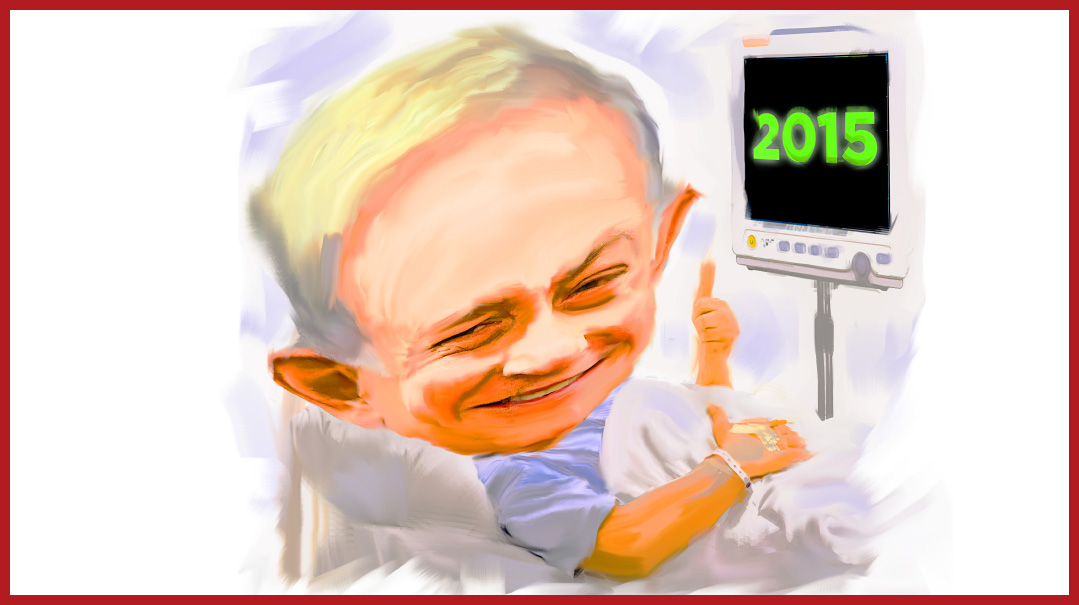
As fifth elections loom, Bibi fears a 2015 reprise
The phrase “call me after the holidays” is often used in the business world to push off tough decisions, and it pretty much sums up the season’s Israeli political map as well. A week and a half before elections is generally when the campaign goes into overdrive — in the media, on the street, and on social media.
But despite the potentially dramatic impact of the 2022 election on Israel’s political reality, the date — right after the chagim — has made it one of the drowsiest in Israel’s history. The Israeli public was busy with the Yamim Noraim and holiday prep, and the only current affairs of major interest were related to terror attacks and security lockdowns.
It’s often said that the opposition never wins an election, just that sometimes the government loses. A drowsy election campaign, going by that dictum, should favor the incumbent government. The prime minister, who controls the agenda by virtue of his post, becomes a steady hand on the wheel and as long as he doesn’t make any serious gaffes, his path to another term is wide open.
But none of the usual paradigms apply in this campaign. As a caretaker prime minister after a year of a wobbly Bennet-led government that daily tottered on the brink of disintegration, Yair Lapid is seen as a placeholder at best. For all his gravitas, his state visits, his speech in the UN and overtures for “peace,” Lapid has failed to cement his image as prime minister in the public mind.
Create a free account to keep reading.