Poland's Jewish glory remains buried firmly in the past
Photos: Eli Itkin; CER
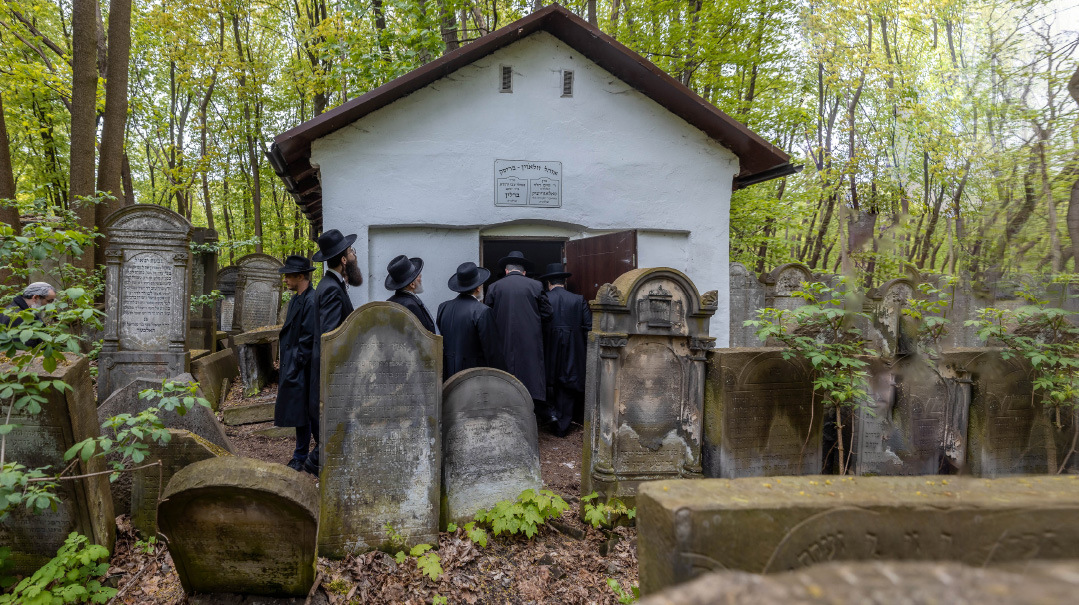
Step behind the high brick walls of Warsaw’s Okopowa Street cemetery, and you’ll find a vanished world. In a space the size of 80 football fields, a quarter-million graves lie side by side. A fable-like quality hangs over the vast necropolis: it’s not so much a cemetery as a jumble of graves overrun by lichen and climbing ivy, swallowed up by the giant forest that has sprung up since World War II.
Entering this still, green kingdom is like walking into a history book. Forgotten geonim and gvirim are buried alongside household names like Warsaw’s first rav, the Chemdas Shlomo, the Netziv of Volozhin, and Rav Chaim Soloveitchik. Here there’s a cluster of markers for the Kotzk dynasty, there is Amshinov, and further along the white ohel of a chassidic dynasty whose memory has faded.
Polish-language inscriptions mark the graves of prewar secular Jews. There’s I.L. Peretz, the Yiddish playwright; Ludwig Zamenhof, creator of Esperanto; a sister of Andre Citroen, founder of the French automotive company.
Resting under the verdant canopy are Agudists, Bundists, Zionists — bitter opponents in their lifetimes, now sharing the same patch of earth.
Create a free account to keep reading.