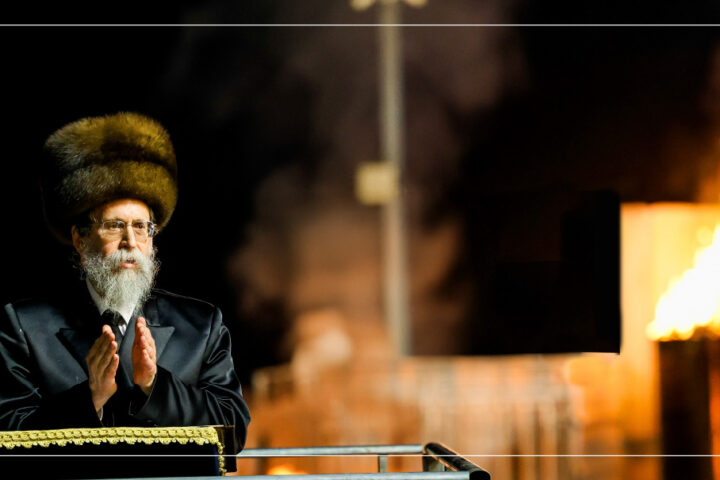
One Friday night in 1952, a brilliant 40-year-old talmid chacham named Rav Sholom Schwadron made his way from his modest two-room home in Jerusalem’s Shaarei Chesed neighborhood to the central shul of the Zichron Moshe neighborhood. The crowd in attendance listened as he wove a tapestry of halachah, parshah, and fiery words of mussar in a masterful display of oratory skills. The Leil Shabbos Zichron Moshe shmuess would continue unabated for more than four decades, and would cement Rav Schwadron’s legacy as the beloved “Maggid of Yerushalayim.”
Rav Sholom Schwadron’s reputation as a maggid stemmed from his natural public speaking talents. While the content was engaging and his message authentic, it was his delivery that captivated his ever-growing audiences. He had mastered the art of varying his tone throughout his narrative to build suspense, and upon reaching the climax of his mussar message — exhorting his audience to improve their behavior — he’d switch to a singsong emotional appeal to their better selves. He utilized an arsenal of stories of tzaddikim and folktales; his knowledge of Jewish history was a veritable warehouse; and he peppered his talks with witticisms and jokes. Rav Sholom was skilled at reading his audience and their diverse levels of engagement, and no soul remained untouched when exposed to his charismatic personality.
The beneficiaries of his dynamic speeches weren’t limited to the Leil Shabbos Zichron Moshe crowd. He delivered two daily Gemara shiurim to Shaarei Chesed residents, served as the mashgiach for several years at Yeshiva Tiferes Tzvi for younger students, and for a decade was the senior maggid shiur at the Mekor Chaim Yeshivah for Sephardic students.
At the behest of Rav Yitzchak Zev Soloveitchik, the Brisker Rav, Rav Sholom emerged as the unofficial spokesman for the nascent P’eylim organization following its establishment in the early 1950s. P’eylim was active among the new immigrant communities, providing religious education for the youth and religious infrastructure for traditional immigrants. Rav Sholom brought the message of P’eylim to broader society and was the organization’s voice at many of its public rallies.
Create a free account to keep reading.