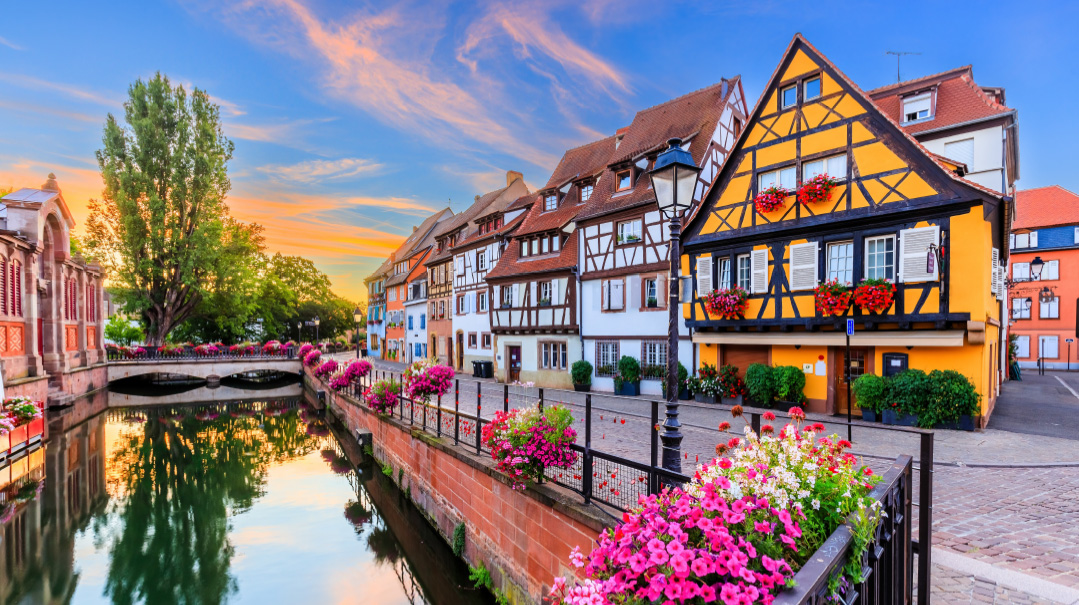
The Alsace vineland — ping-ponged between France and Germany for hundreds of years— is proof that a Yid says l’chayim no matter what comes his way
“When I was young,” he continues, “we had a Talmud Torah here. Rabbi Gershon Cahen from Strasbourg would drive up in his old Citroen every week — he drove to all the villages to teach the children. We had five or six classes, children on different levels of Hebrew studies. Twenty years ago, when there were not enough children, we had to close down the Talmud Torah. The older people have passed away, and the youngsters moved — or assimilated. There are people living here whose parents I knew from shul. But when I phone them up to come for minyan, they don’t want to know.”
The Shabbos minyan meets on alternate weeks here and in Lingolsheim, the next village over. High Holiday services are held here, but Denis says it’s too hard to get ten men together for a yahrtzeit. “It’s easier to go into Strasbourg. And my brother lives in Strasbourg.” When Pesach arrives, he rents a hotel next to the shul and hosts a Pesach program for 100 people, with services, Pesach meals, and socializing.
Two blocks away, above what looks like a car workshop, we notice the year 1696 and the Hebrew year Tav-Nun-Vav carved into stone, while the doorway is marked by a mezuzah indentation. This is the location of an ancient shul, the structure of the back of the aron kodesh protruding from an outside wall. Pieces of a stone-carved bimah remain from 330 years ago, and the non-Jewish residents who subsequently bought the next-door property were so enamored of its moldings that when one cracked, they replicated the moldings of the shul in the entrance of their apartment building.
Next, we walk to the medieval Ruelle De Juifs [Jew Street], or as is written in old German-Alsatian, Juddegassel, a narrow cobblestone alley which, apparently, was a canal in medieval times. Mr. Geissmann stops at a boarded-up door, explaining that this structure once housed a medieval mikveh, then points to a nearby low-arched doorway. “Here was a medieval yeshivah. And look.” Clearly engraved in the stone is the town’s oldest Hebrew inscription. The word “Shlomo” is clearly visible.
Create a free account to keep reading.