“Something had opened inside of me, a new channel of feeling, and it found expression in music. Whatever opened that day has never really closed.” He closes his eyes. “Baruch Hashem.”
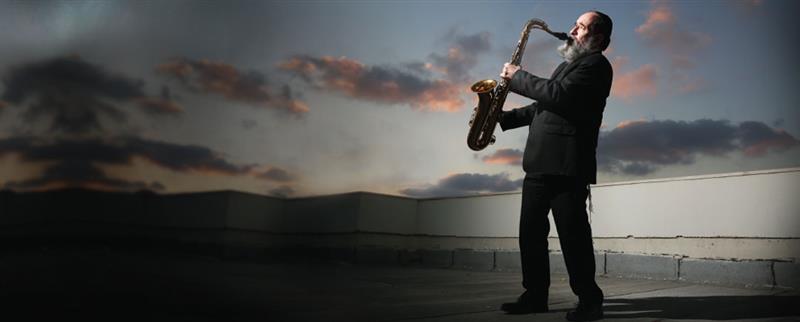

Photo Eli Cobin, Family Archives
He’d rather forget the first record he produced as a teenager in a Petach Tikvah yeshivah, but although that album is long hidden away, it was the inspiration that sent Moshe Mordechai (Mona) Rosenblum on his journey. From director of the IDF Rabbinate Choir to the first Belz albums and early MBD, Mona’s decades-long career as the most celebrated arranger and conductor in Jewish music brings everyone into the niggun
U
ntil I met Mona Rosenblum, I was sure he’d match the cool first name. But the gentleman who comes out of the Bnei Brak apartment building to greet me doesn’t look like I imagined a “Mona” to be — artsy and casual. Instead, he looks like a rebbi or vigilant kashrus mashgiach, his hat jammed securely on his head, peyos wrapped tight around his ears, avreich-style dark suit jacket flapping in the breeze.
He leads us into the apartment in the way of someone unaccustomed to this sort of thing. He generously pulls out the chairs and places a closed bottle of water on the table, but forgets about the cups. A few minutes later, he realizes and sheepishly hurries back to the kitchen.
There is kind of a silent laugh in his eyes and he chuckles audibly and often, seemingly amused by his own story. He’s generous with stories and commentary, but it’s when this celebrated conductor, arranger, and composer of modern chassidic music is seated on the dark bench near the large piano that he’s most natural, words flowing as easily as the fingers that dance across the keyboard. Music, in his retelling, isn’t an escape, or even a passion. It’s an identity: The moment he learned about self-expression, the music started playing and it’s never stopped.
Create a free account to keep reading.