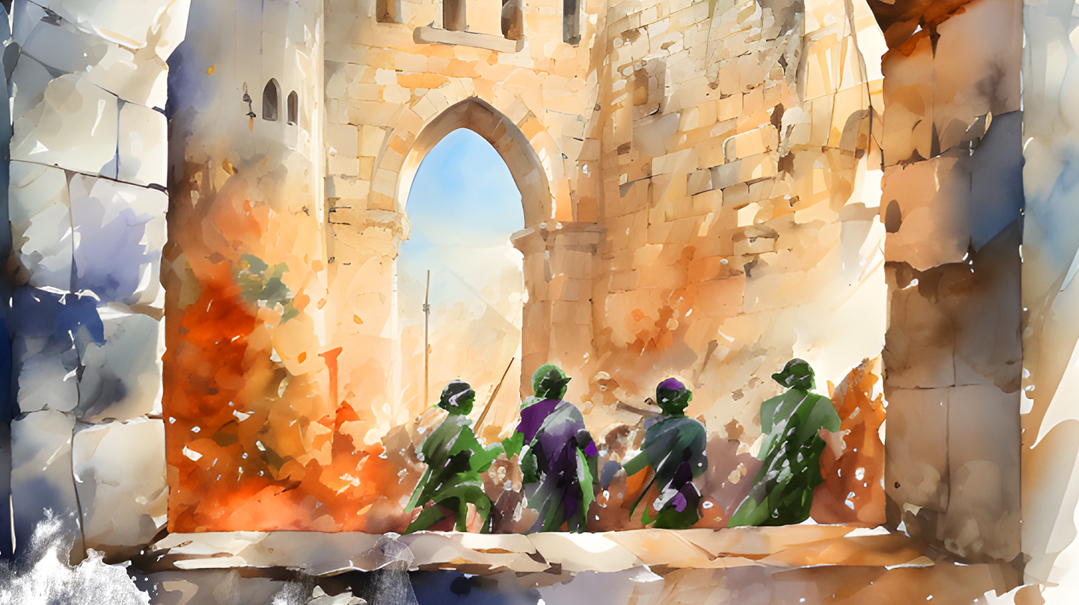
Mrs. Yanussi vividly remembers the Shavuos that fell out days after the end of the war. “Most of Yerushalayim went to the Kosel that chag, many for the first time in their lives. I remember the masses of people streaming past my home, their faces lit up with happiness and excitement. They sang songs of praise and gratitude to Hashem as they walked. When I arrived at the Kosel, for the first time in my life, tears flowed from my eyes without letup.
“Along with the overwhelming joy and the sense of gratitude for the victory in the war and the liberation of the Kosel, we wept for the thousands of bereaved families, for the young blood shed in the war for this land.
“The entire Jewish Yishuv was in a state of euphoria after the shocking victory, which was a pure miracle. From the conversations I’d overheard during the many months when the soldiers stayed with us, we’d understood that the threat from the neighboring Arab nations was not something to be made light of.
“Over the next few months we started getting used to our new lives; it’s easy to get used to a change for the better. We could daven at the Kosel on a daily basis. We bought cheap clothes, shoes, purses, and whatnot from Arab merchants at Shaar Shechem, where we could wander without fear. The Arabs were terrified of us. At that time, I could never have imagined that a day would come when we would be afraid of them, and we wouldn’t dare walk freely in Shaar Shechem or the Muslim Quarter in general.
Create a free account to keep reading.