How artist Boris Dubrov found his way back to the shtetl he'd never known
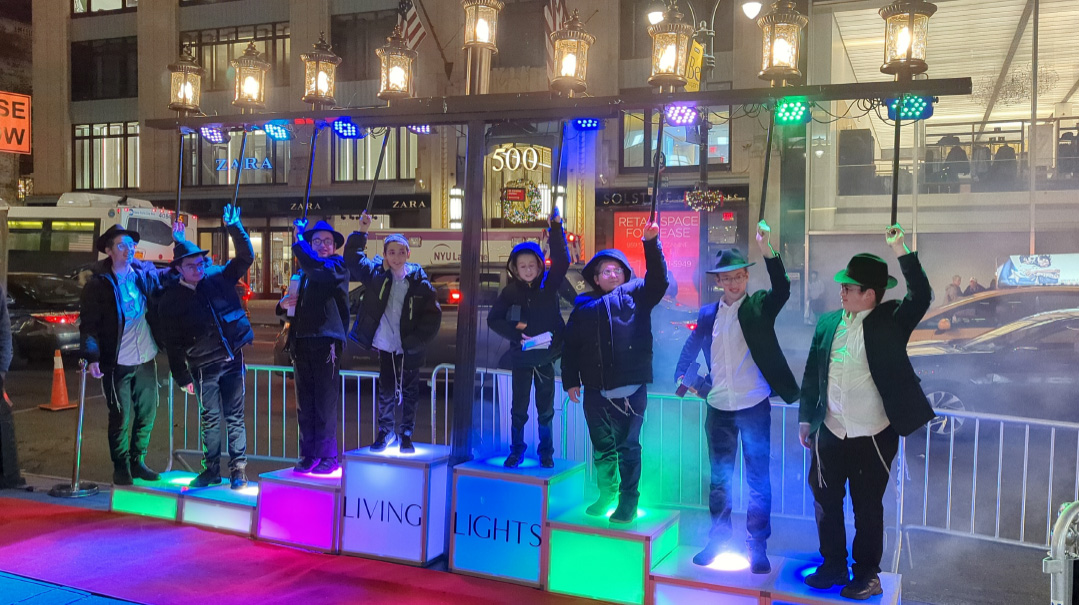
One Chanukah close to two decades ago, Boris Dubrov, a talented artist who’d recently immigrated with his parents from Russia to Israel, received an invitation from a fellow craftsman from Ashdod to join his chassidic family for Chanukah candlelighting. Boris, for his part, planned to take advantage of the visit for professional purposes: At the time, he had begun working on a series of Judaica paintings centered around the Jewish holidays, but the problem was, his Jewish background was practically nil.
What he didn’t expect was how those Chanukah lights would captivate him. “And it wasn’t only the candles,” he says today. “It was also the warmth of the home and the children playing together, the songs, and the atmosphere. Until then, I’d never seen Chanukah candles being lit. I had no idea what it was.”
That was the beginning of a journey that led him to Torah study, and a fascination with chassidic culture and the lost world of pre-war Jewish communities of Eastern Europe. Eventually, Dubrov’s pull toward Kabbalah brought a new dimension to his work: a mix of mysticism and allegory, something he calls “Kabbalistic realism” (or “Kabrealism”) that has become somewhat of a trend in the line of modern art.
A walk through Boris Dubrov’s new studio in Rishon L’Tzion (after being in Ashdod for years) is like a time machine, taking you back to the days of the shtetl of Poland or Ukraine. Hundreds of Judaica paintings look down on you, the figures taking on a personality of their own: the town water carrier, the wagon driver lugging barrels of wine, a father and son sitting and learning on a wooden bench in a shul — a pile of wood for the fireplace in the background. Every detail is authentic and precise, from the wooden toys to the tablecloth, to the small buttons on the shirt and the patch on the sleeve.
Create a free account to keep reading.