In the Alaskan tundra, fierce winds and hostile terrain isolate hundreds of villagers from humanity, food supplies, and medical aid. The pilots of Era Aviation bridge the yawning divide with their bush planes, specially outfitted to brave the subzero temperatures and hurricane-speed winds that are practically humdrum to Northern Alaskans.
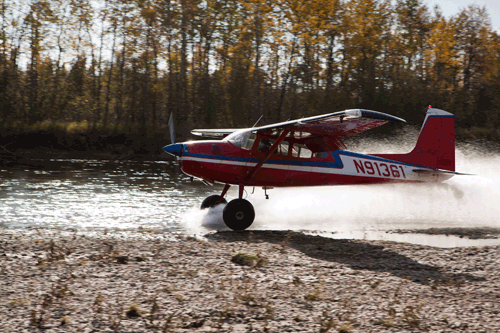
“Planes are for Alaska what semi-trailer trucks are for the lower world,” says Susan Aikens, supervisor of the Kavik River Camp one of the remotest outposts in Alaska. Though the camp is equipped with Wi-Fi capability as well as phones, the closest big city is Fairbanks, 500 miles (800 km) to the south, and the closest road is 80 miles (130 km) to the east.
Aikens lives in the Kavik camp year-round much of the time alone. “I like the challenge that it brings to me” she says. “It’s not a forgiving environment. One thing you can say about Alaska is it either gets into your blood or it doesn’t. And if it gets into your system then no matter where you go there’s a calling to come back.”
The only way for Susan to receive supplies is by bush plane — a general aviation aircraft usually used in the African bush the Alaskan and Canadian tundra and the Australian outback. By the second week of September it’s already -5°F (-20°C) to -10°F (-23°C) in Kavik and she’s taking possession of the last delivery she’ll get for the next nine months. The next one will arrive in June of the following year.
“If I don’t get it in with the bush pilots there is no getting it,” she puts it bluntly. “If I need anything, if I get hurt, planes are the only way I can get assistance.”
Create a free account to keep reading.