Your life is the best for you to serve Hashem in your unique way

Rebbe Yitzchak of Radvil writes that the nation had flags to help each tribe identify their location in the camp, just as an army has flags for the soldiers to find their camp. But did the flags have no deeper meaning than simply serving as landmarks for the Yidden to find their way home?
We were sitting around the Yom Tov table Shavuos night several years ago, surrounded by our family and guests. As was his habit, my husband brought up the famous gemara, where Rabi Yosi states, “If not for Torah, I would just be another Yosi in the shuk.”
“What does receiving the Torah mean to you personally?” asked my husband. “If not for Torah, who do you think you would be?” He then gave each person the chance to respond. We’ve done this often over the years, and the responses vary. But that particular Shavuos remains etched in my mind, as I truly got a glimpse into the value of this thought.
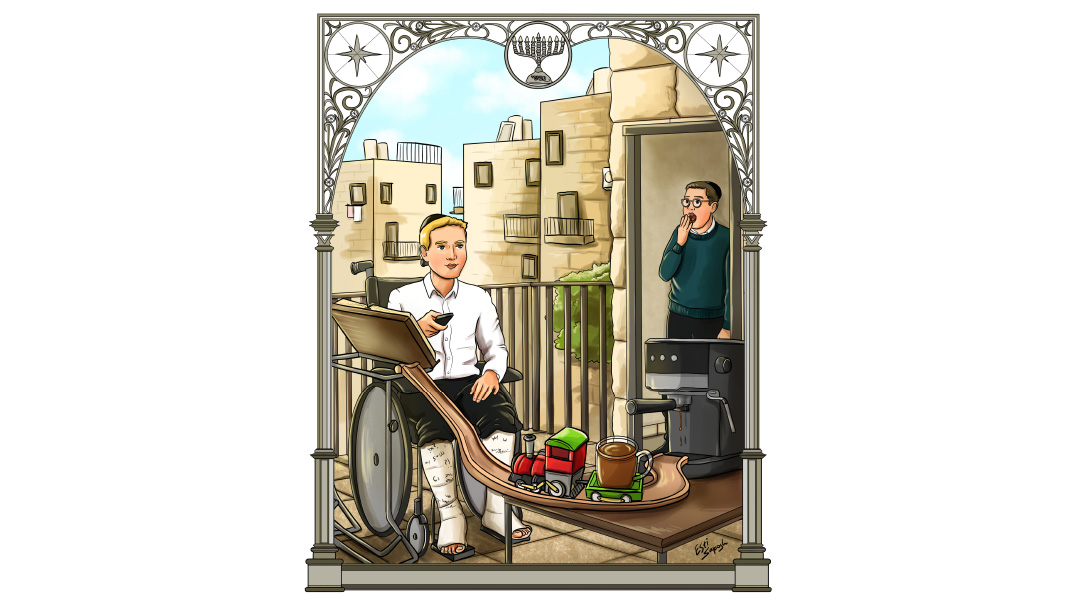
One by one we went around the table until we got to Rimon. Rimon, who davened in our shul, was a familiar face at our table. A sweet man with a penchant for telling jokes, he lived in a group home and appreciated spending Yom Tov with family. Rimon was quite bright cognitively, but several personality handicaps left him limited in his life choices. When it came to his turn, he looked pensive.
“If not for Torah, what would I be?” Rimon repeated the question slowly. “If not for Torah,” suddenly his voice broke, “I would just be another disabled person in this world! Someone who can’t accomplish or live a normal life and I’d have nothing to make me feel good about myself! But with Torah,” he banged his hand on the table for emphasis, “I’m going to stay up tonight and learn! I’m going to daven tomorrow in shul! I’m going to do whatever mitzvos I can! And I know that I’m not just another handicapped person in this world. Hashem made me this way because He loves me this way. And I am so happy that I can be a ben Torah in Hashem’s world!”
Create a free account to keep reading.