“When we start at Chapter 26, we have no idea what happened in the 25 previous chapters”
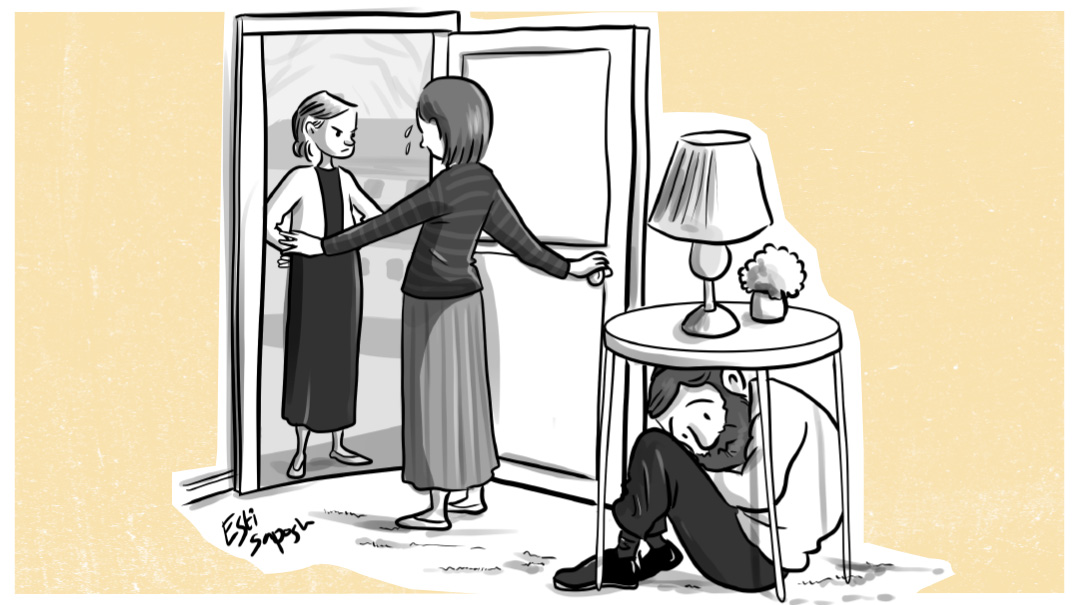
This is a perfect reminder that when we start at Chapter 26, we have no idea what happened in the 25 previous chapters. We have no idea what this couple’s history is or even what happened just prior to them getting on the bus. There are many instances where a scenario appears clear-cut, replete with good guys and bad guys. We all love a good victim, perpetrator, rescuer triangle where everyone plays their part to perfection. We especially feel a charge when we are the potential hero.
I’m not suggesting that you relished the possibility of being a rescuer. This was clearly an uncomfortable situation to witness, much more so to be a part of. But there is a rush of self-importance that needs to be checked before being so quick to judge a situation. We also need to explore whether a dynamic like this brings something up for us that needs attention.
It’s hard to know whether this was a case of “al taamod al dam reiecha” where you need to intervene to ensure someone’s safety, or a case of potentially embarrassing someone and causing them a different type of death. I can’t speak to the halachic consideration, but I can say that we need to tread carefully and by invitation when we enter someone’s personal space.
So this might leave you feeling helpless. Is there nothing we can do when we see someone being hurt?
Create a free account to keep reading.