- It might be a dark leil shishi, or perhaps even a Friday afternoon. Van after van pulls up in front of an enormous beis medrash, disgorging black-hatted bochurim. Most disperse quickly to specific addresses, while some gather their belongings and walk slowly up the grand stairs at the front of the building, surveying the scene slowly, not quite sure where to start.
- A young Yeshiva University student, heading to a shabbaton in Upstate New York on a short Friday in January, runs into car trouble along Route 17. He pulls over to the side of the highway, gaze flitting from the steaming hood to the steadily dropping sun. With Shabbos approaching, it dawns on him that he’s facing much bigger problems than a repair bill.
- Shacharis is just ending in the yeshivah when fire alarms blare, and the hallway fills with smoke. After everyone is evacuated safely to the parking lot, the roshei yeshivah’s eyes meet in immediate concern: It’s mere hours to Rosh Hashanah, and the building is uninhabitable. What will be?
- The setting sun on Friday afternoon doesn’t concern this non-Jewish family at all, but their pleasant drive along Seven Springs Road comes to a halt when ominous sounds of distress emerge from the backseat. Mom looks back, and her hand flies to her mouth. “Oh, my G-d, stop, stop!” she shrieks. “Stop the car, she’s having a seizure!” Dad pulls over and hurries to his little daughter, whose breathing is coming in short, shallow gasps; a tinge of blue spread across her features. Mom hastily fumbles for her phone and dials 911. Will help arrive on time?
- Urgent call wrapped up, a tireless Chaveirim volunteer runs to the store for some last-minute shopping before heading home to get ready for his daughter’s Shabbos sheva brachos. Between the aisles, he encounters a group of 25 lost-looking young men. They need help; can he do something?
There may not be a common thread woven through these emergencies, but there was certainly a common solution.
Two letters: KJ.
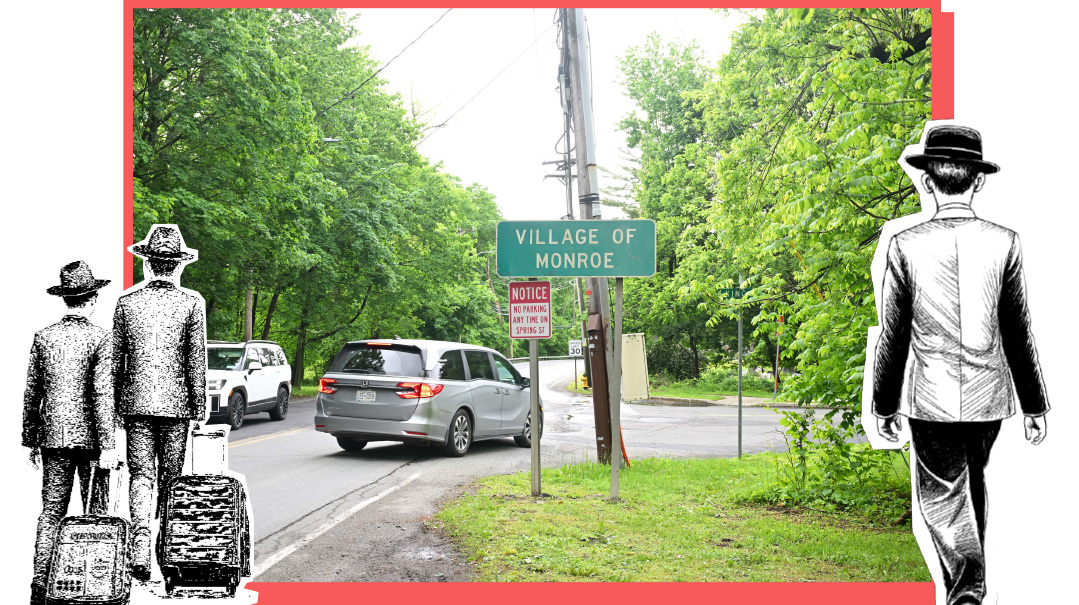
Perched at the gateway to the Catskill Mountains, midway between Monticello and Brooklyn or Lakewood, Kiryas Joel often provides solace for trapped travelers or stuck sojourners. The brainchild of the Satmar Rebbe, Rav Yoel Teitelbaum ztz”l, the town was designed to provide a protected, rarified environment for the chassidim, minimalizing exposure to outside influences. Far from the cultural melting pots of Boro Park or Williamsburg, nestled at the nexus of mountains and highways, this enclave would allow the Satmar kehillah, violently uprooted from the hallowed shtetlach of Eastern Europe, the privacy to pursue their avodas Hashem in relative peace until Mashiach’s arrival.
That vision has largely held, and the kehillah’s location and strength of community allow it to serve as a powerful resource for chesed, kiddush Hashem, and hospitality. In recent years, it’s also become a destination for bochurim seeking a brief change of pace, an exploration of the new and different, and a spark of inspiration or flame of warmth.
Fortress of Chesed
Reb Yitzchok Shea Kornbluh is a Kiryas Joel icon. “He’s the type of person who will do anything for anyone,” a resident of the village tells me. “There’s nothing too difficult for him, nothing beneath him, when it comes to helping others. He’ll crawl under a bus if necessary, and host dozens of people minutes later. He stops at nothing.”
Kornbluh, a dispatcher for Chaveirim of KJ and all-around doer, has 13 children and a host of personal responsibilities; you would think he has enough on his plate. But for many people in trouble in the area, KJ is the answer, Kornbluh is the name, and his is the number.