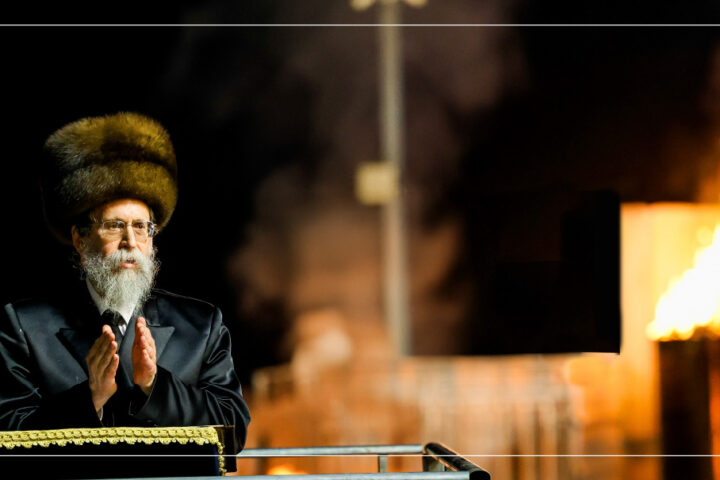
The Chofetz Chaim: “While we sit below and try to be mesaken olamosAbove, the Leshem sits Above and does the tikkunim there”
This column is dedicated in honor of the bar mitzvah of Ari Moskowitz.
Having lived his long and fruitful life quietly and modestly in the Zhamut region of Lithuania, Rav Shlomo Elyashiv (1841–1926) yearned to spend his last years in the Holy City of Yerushalayim. In his youth, he had studied in Minsk under Rav Gershon Tanchum. As a young married scholar, he resided in Telz, where he became a close student of Rav Yosef Raizen, who opened his eyes to the world of Kabbalah. The young Rav Shlomo Elyashiv quickly emerged as the leading kabbalist in the Lithuanian world, and one of the most renowned kabbalists in recent centuries. As an expert in the kabbalistic approach of the Vilna Gaon, Rav Shlomo delved into the secrets of Jewish mysticism, taught a generation of kabbalists, and authored some of the most important works in this realm in the form of his magnum opus Leshem Shvo Ve’achlamah.
Upon the publication of this monumental work, the Chofetz Chaim commented, “While we sit below and try to be mesaken olamos [mend the worlds] Above, the Leshem sits Above and does the tikkunim there.” The Leshem resided in the city of Shavel for most of his adult life. According to a few different sources, Rav Yisrael Salanter either arranged to meet with his much younger counterpart the Leshem, or perhaps they had a chance encounter. Rav Yisrael Salanter, founder of the mussar movement, was completely focused on the more earthly and practical elements of human behavioral improvement. As such, he looked askance at Rav Shlomo’s preoccupation with kabbalistic studies. Despite these differences, they had great mutual respect for one another, each appreciating the holiness and contributions of their counterpart.
For years, it was believed that the funding for the publication of Leshem Shvo Ve’achlamah came from the great patron of Torah and mussar from Berlin, Ovadiah (Emil) Lachman. Supporting many Torah ventures, including the yeshivos in Slabodka, Kelm, and Telz, as well as the renowned Kovno Kollel, at some point the Berlin philanthropist was introduced to Rav Shlomo Elyashiv. Rav Nosson Kamenetsky writes:
Create a free account to keep reading.