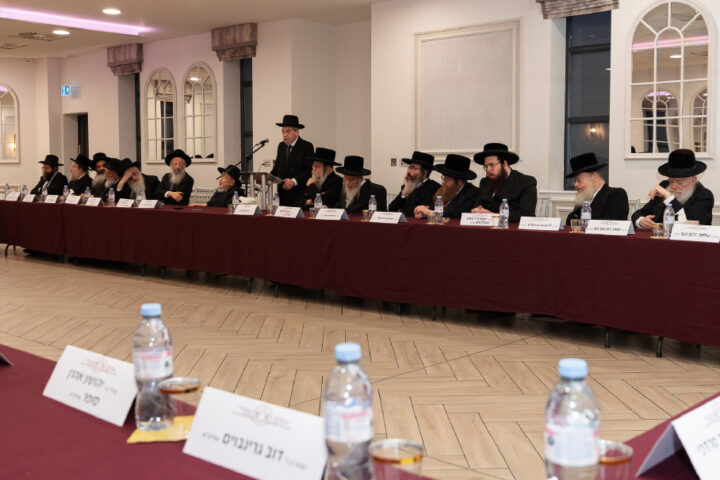
It is against Torah hashkafah to take offense to or reject a sincere question
SOmany individuals grow up with gnawing questions about the fundamentals of Yiddishkeit. Their questions may be trite and simplistic (Why do we keep Shabbos?) or profound and weighty (How do I know there is a G-d? How is it possible that Hashem knows every move I make, yet I have free will?).
It’s not the particular question that is germane — every sincere and thoughtful question is relevant and important. Rather, it’s the way the question is received and handled. Sadly, the questions are at times either rebuffed or repudiated by parents and teachers. The outcome is that some seekers despondently trudge through life with lingering doubts in ikrei emunah, and others tragically throw in the towel, religiously.
The Hebrew word for question, sh’eilah, is etymologically derived from the word sha’al — to borrow or request. According to Rashbam, Tosafos, Chizkuni, Kli Yakar, and other commentaries, sha’al, in this context, does not mean to borrow but rather means to request something that is one’s rightful possession — one’s natural entitlement.
It is against Torah hashkafah to take offense to or reject a sincere question. Just as water sustains the physical world and is free and accessible to everyone (this predates New York City’s water meters), so too should knowledge be available freely. This is precisely why, according to the halachic ideal, one should not charge tuition to dispense Torah knowledge (see Yoreh Deiah 246:5).
Create a free account to keep reading.