While Jews are rarely at a loss for words, not many of us can rattle off an obscure word’s definition, etymology, and pronunciation. But Sol Steinmetz, who passed away last fall, was such a person — a true “lexical supermaven” who also never forgot what it meant to be a mentsch.
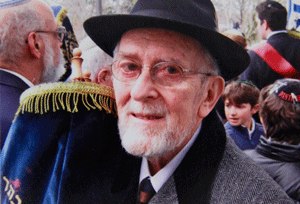
While Jews are rarely at a loss for words, not many of us can rattle off an obscure word’s definition, etymology, and pronunciation. But Sol Steinmetz, who passed away last fall, was such a person — a true “lexical supermaven” who also never forgot what it meant to be a mentsch
“The difference between the almost right word and the right word is really a large matter — it’s the difference between the lightning bug and the lightning.” — Mark Twain
Words are of interest to everyone, especially to Jews, the descendents of Shem (“name”) and the “People of the Book.” Samuel Johnson, the eighteenth-century compiler of an authoritative dictionary of the English language, called them “the dress of thought”; another wit described them as the best nonsurgical way to transfer thoughts from one head to another. Just as a person’s use of vocabulary and elocution demarcate lines of social class and origin, language situates people in terms of an era, since new expressions and technical terms enter and leave the sea of language with the regularity of tides.
There are people who devote their professional lives to defining and tracking words, officially known as lexicographers. Their work is largely invisible to us, but they make up the small but essential core of people who devote themselves to expanding and updating such indispensable institutions as the Random House Dictionary and Oxford English Dictionary.
Create a free account to keep reading.