What is it about Jerusalem that turns people into self-proclaimed messiahs and incarnated prophets?
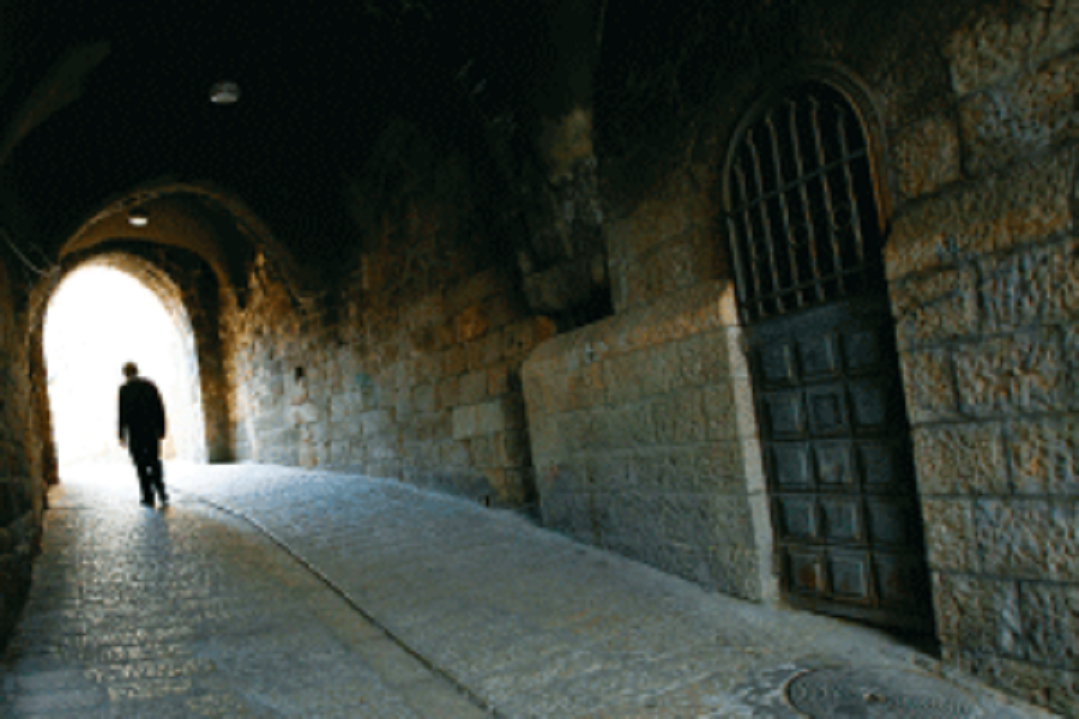
It could be the man in the Israelite tunic with the flowing beard holding up a placard at the entrance to Jerusalem warning of the looming Armageddon. It could be the Christian tourist walking around the Old City wrapped toga-style in his hotel’s bed sheet, proclaiming his newfound identity as a prophet-incarnate to any passerby who will listen. It could be the young man in Chassidic dress hanging around one of the gates to the Temple Mount waiting to take action as per the instructions he believes he’s received from Above.
Walking through the winding alleyways of Jerusalem’s Old City, you have a pretty good chance of bumping into a self-proclaimed “messiah”, incarnated prophet, or Davidic inheritor. What these people have in common is loosely defined as “Jerusalem Syndrome,” a type of religious mania where tourists – or even longtime Jerusalem residents – become so overwhelmed with the spiritual symbols and power of the Holy City that they dissociate from reality and believe themselves to be biblical figures or hand-picked emissaries for a Divine redemptive mission.
In popular articles about Jerusalem Syndrome, the scenario might involve a salesman from Newark or a housewife from Kansas – regular Americans with regular lives – on a tour group headed for Israel. Once the salesman hits Jerusalem, he suddenly begins to exhibit extreme religious behaviors, separating from his group and instead spending his days in prayer, fasting, refusing to bathe (or, conversely, bathing excessively for purification purposes). Then, when the Voices enter his head, he might start to babble about his divine mission, about the imminent Apocalypse, and how he has been ordained to spearhead the redemption. He’s harmless, but the hotel manager doesn’t want a messiah ranting prophecies in his lobby (bad for business – not to mention those missing bed sheets), and has him carted away to Kfar Shaul or Herzog Hospital, the city’s two psychiatric facilities. The tour group picks him up on the way home, and once he’s out of Jerusalem and in his familiar environment again, he settles back into reality.
Jerusalem Syndrome was first defined by an Israeli psychiatrist named Heinz Herman in the 1930s, who described a large variety of extreme and excited behaviors and anxiety states exhibited by some visitors to Jerusalem. One of his cases involved an Englishwoman who was so convinced of the imminent Redemption that she climbed to the top of Mount Scopus every morning with a cup of tea to welcome the Redeemer. More recently, writing in the British Journal of Psychiatry, Dr. Yair Bar-El and his colleagues at the Kfar Shaul Mental Health Center in Jerusalem described three types of disturbed tourists. There are those with a psychotic history who feel divinely called to Jerusalem, some thinking they are a messiah or a prophet; those who are non-psychotic eccentrics who get triggered by the religious intensity of the city; and otherwise normal folk who have an intense temporary psychotic episode.
Create a free account to keep reading.