"...we must remember that one of his first decisions was to break diplomatic ties with Israel and support the Palestinian cause”
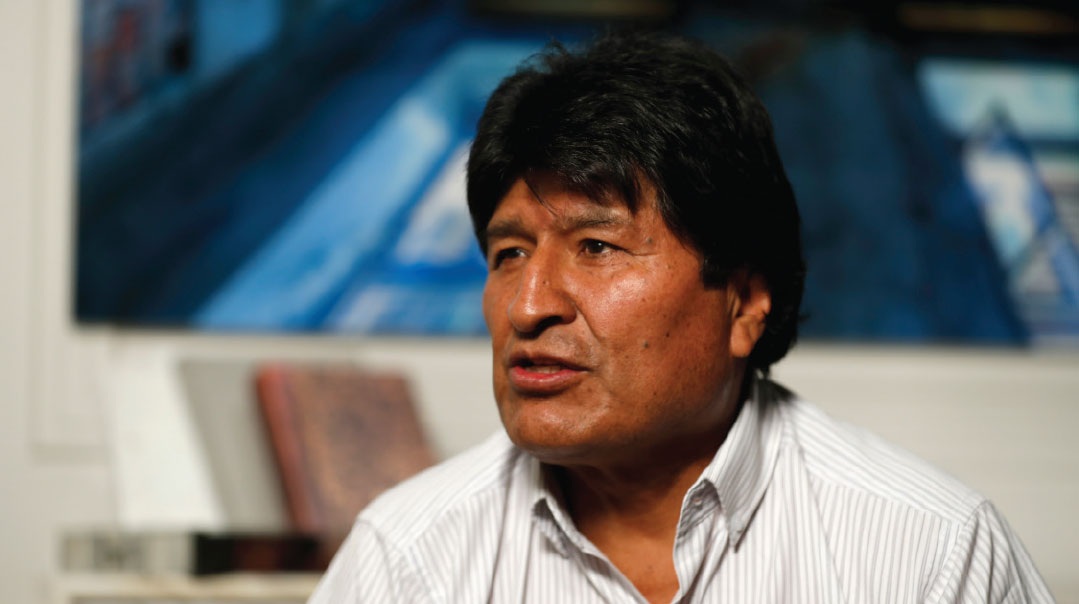
hile’s northern neighbor Bolivia has also been shaken by a social crisis — one that deposed Marxist president Evo Morales, claimed at least nine lives, and stirred disruptions for the whole population, including the small local Jewish community, estimated at fewer than 1,000 people.
Leadership of the country has been assumed by self-proclaimed interim president Jeanine Añez, an opposition politician who took power with the support of the security forces and allied parties. Morales, who held power for 14 years and was the first indigenous president in a country historically ruled by the white elites, is now exiled in Mexico. He claims he was a victim of a coup, but the opposition counters that he attempted to perpetuate his hold on power by committing fraud in the October 20 elections.
Attorney René Ender, a member of the small Jewish community in Bolivia’s capital city La Paz, told Mishpacha that “all communal activities have had to be suspended, because all the roads are blocked.” Ender affirmed that Morales did not cause problems for local Jews, but added that “the relationship was cold… we must remember that one of his first decisions was to break diplomatic ties with Israel and support the Palestinian cause.”
Ender said that although people “were indignant because Morales wanted to remain in power against popular will,” the truth is that many sections of the country remain loyal to him, and civilian clashes with the army, who pushed Morales out, are constant and ongoing.
Create a free account to keep reading.