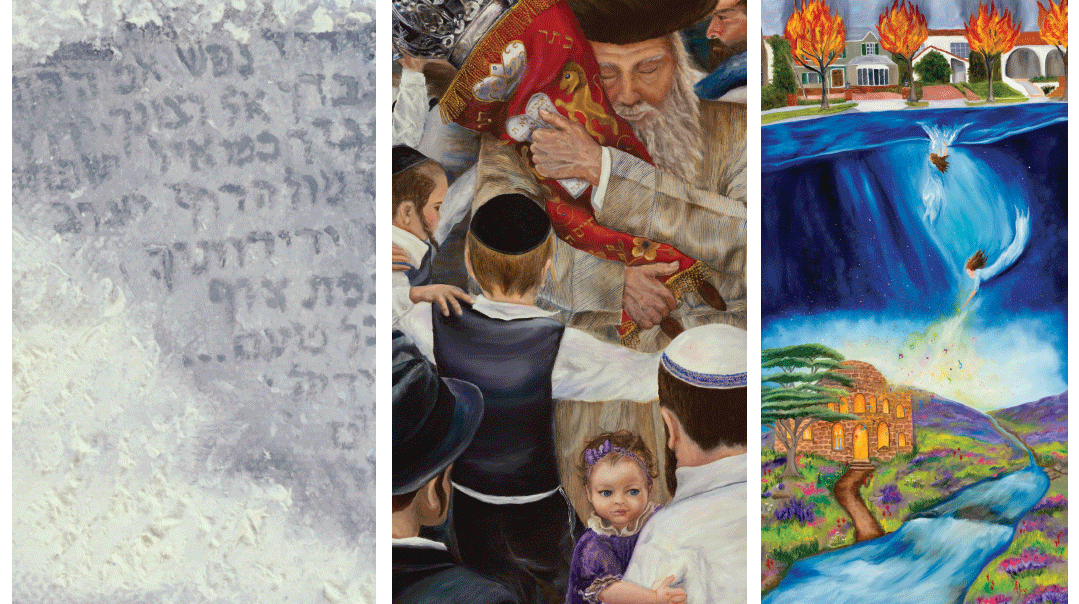
Artist Aliza Marton doesn’t simply paint beautiful scenes; her art incorporates uplifting pesukim, hinting at the spiritual lens through which she views the world
Although Aliza often sketches her paintings in advance, sometimes she makes decisions as she goes along and observes how a piece turns out. For instance, Aliza wanted to paint Krias Yam Suf not from the usual view on the ground, but from overhead: a bird’s-eye view. “I painted the Yam Suf, and then the horses of the Mitzrim coming after us, and I realized that I liked the painting just as it was, so I left it,” Aliza explains. She added the pasuk from perek 20 of Tehillim: “The Mitzrim slumped and fell, but Hashem invigorated us and saved us.”
As I look at the piece, I realize that the stark and striking images of the horses and the pasuk force the viewer to imagine the next moment, when the Mitzrim and their horses were swallowed up by the Yam Suf as Bnei Yisrael continued on their way on dry land.
Another one of Aliza’s paintings is inspired by a class that she teaches. “I teach a Navi class every week, and we’re coming to the end of Melachim. Speaking about the destruction of the Bais Hamikdash is so sad. Today, we can no longer offer sacrifices to G-d — instead we offer up our prayers.” Aliza’s painting Our Prayers depicts that reality, showing Hebrew letters going up through abstract Jerusalem walls, through the Bais Hamikdash, and rising to the heavens. Aliza admits that she was nervous about the painting. “It’s such a different style than what I normally do,” she says. “Sometimes, you just have to try something new.”
Aliza hasn’t stopped painting since her first class with her daughter. Although she teaches six times a week, five art classes and one Navi shiur, she schedules her own sessions to paint, and often loses track of time in her studio, working there deep into the night.
Create a free account to keep reading.