The success of the concept behind the JEP recordings of the early 1970s
W
 hile I was sitting (socially distanced, of course) in a bagel store in Monsey the other day, a fellow approached me. “Hey, Golding, I know your brother Yosef Chaim from Camp Kol-Ree-Nah. I remember him from when I was a camper in 1965!” I asked him if he remembered who won color war that year, and he jumped up and said, yes, his team won — and he even broke out into his team’s marching song, right there in the bagel shop. He might not have remembered where he parked his car, but he remembered his winning color war song from 55 years earlier. Why am I sharing this? Because it just proves again the success of the concept behind the JEP recordings of the early 1970s.
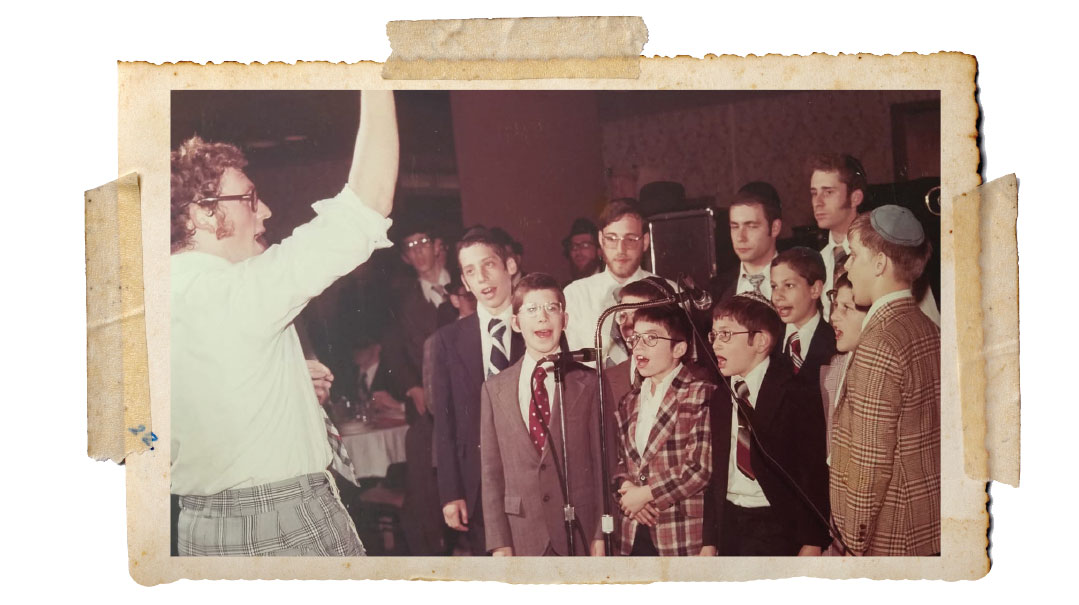
The Jewish Educational Program, better known as JEP, was created by Rabbi Mutty Katz and my brother Yosef Chaim, in order to bring a spark of Judaism to Jewish kids in public schools, who had little or no Jewish background.
One day, Reb Mutty came up with the idea of making an album of English camp-style songs and using the profits for a scholarship fund to get these children into Jewish schools. My brother Yosef Chaim liked the idea, so he approached a few people in the music business — who unanimously assured him that it would never get off the ground. Yosef Chaim dismissed their misgivings, though, and instead teamed up with his chavrusa, Moshe Hauben, along with a bunch of Yeshivah Torah Vodaath bochurim — future pillars of Klal Yisrael. Mordechai Finkelman, Shimon Finkelman, and Chaim Dovid Zweibel were in charge of lyrics, Shmuel Pollack was the adult choir director, and Yisroel Lamm was the musical director.
The first JEP album came out in 1973, and it didn’t take too long for Yosef Chaim to prove that his instincts were on the money. The album was a fusion of some new hits — who remembers the leibedig “Yehi Chevod Hashem Le’olam”? — and a few borrowed tunes with English words, but the original compositions were the real sellers. “Dear Nicholai,” written by Chesky Kornfeld and composed by Heshy Walfish as a Camp Kol Ree Nah alma mater, is a song in the form of a letter written to a child behind the Iron Curtain, deprived of all things Jewish. As child soloist Heshy Wolf belted out, “Your plight pierces my soul, a Jew truly exiled, but yet, a Jew of courage whose faith shall never die,” he opened many hearts. The other heart-clencher, “Six Million Tears,” was written by Chaim Schmell, who also headed the children’s choir for this first album. The two adult vocalists, Rabbi Berel Leiner and Rabbi Heshy Grunberger, who captured the pain and suffering of the Holocaust (“While six million tears fell to the ground, the world stood still, didn’t make a sound…”), went on to be the soloists for all future JEP albums.
Create a free account to keep reading.