As the Chabad shaliach to the global deaf community, Rabbi Yehoshua Soudakoff sounds the call of Torah for those who could never before hear it
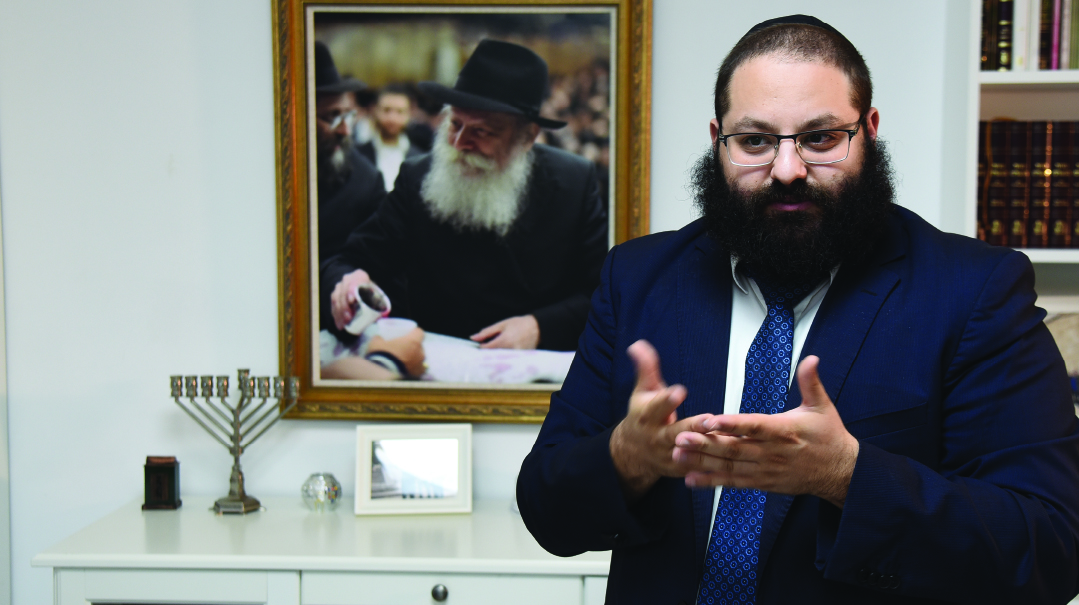
Unlike the vast majority of deaf children who are born to hearing parents, Yehoshua Soudakoff was born into a deaf home. His parents and three siblings are all deaf, which, he says, was actually a tremendous blessing for him. When hearing parents have a deaf child, there is a lot of confusion about how to raise him. The parents don’t know sign language and have to figure out how to communicate with their child. Some teach their children to lip-read from infancy, hoping they’ll integrate into the hearing world; many opt for cochlear implants, but they aren’t always a perfect solution either. (Cochlear implants stimulate the auditory nerves with electronic signals, which the child learns, through intensive training, to interpret as speech.)
When his own parents were growing up, his grandparents never taught them sign language, expecting them to learn to communicate with others only by speaking in English. They only learned to sign once they entered college and encountered other deaf people who signed. As they learned ASL (American Sign Language), they found they could express themselves better, and decided to communicate that way with their own children. And so, Rabbi Soudakoff (who doesn’t have implants but does wear hearing aids, which enable him to hear noises although he can’t differentiate between them), was surrounded by sign language from day one, and at nine months he was already signing to his parents that he wanted his bottle.
“Also,” Rabbi Soudakoff adds, communicating in ASL through his interpreter, Nanette, “deaf kids in hearing families often wind up on the sidelines, through no one’s fault. The fact is that they’re always missing things. Someone makes a joke and they don’t get what everyone’s laughing about. They get used to being left out. They’re trained to give up and say, ‘whatever.’ So having a deaf family made a huge difference in my confidence level.”
Rabbi Soudakoff’s parents did all they could to integrate him into a hearing world. He attended public school in an integrated classroom of both deaf and hearing children, and also received years of speech therapy both in school and at home. As his parents were traditional and very Jewishly-conscious, his bar mitzvah at the Kosel — where he leined from the Torah himself, boosted by lots of speech therapy and private sessions with a kriah tutor — sparked an unquenchable thirst for Jewish knowledge and Torah. He wanted to advance in this area, and although his parents agreed to send him to a Jewish high school, none of the local yeshivos had the resources — which would include hiring a full-time ASL interpreter — to meet his needs. Then he heard about Nefesh Dovid in Toronto, the only yeshivah in the world created specifically for bochurim who are deaf or hard of hearing. So off he went, and for the first time in his life, he met other deaf boys who were religious, many of whom remain his close friends. The shiurim at Nefesh Dovid — on par with a regular yeshivah — are all in sign language. Rosh Yeshivah Rav Chaim Tzvi Kakon, who is himself deaf and is a living inspiration to his talmidim of what they can accomplish, “Yiddified” ASL by inventing signs for Gemara terms.
Create a free account to keep reading.