
The little girls jumped rope as the wind blew softly through the narrow alley, rustling the leaves on the nearby trees. I watched them for a moment, drawn by their long braids, all swinging in rhythm as the rope hit the ancient stones. If my mother’s life had taken a different trajectory, would I have been one of those little girls? Would my children too have stayed within the shelter of those small back streets, content in their world? I was only 18 on that summer afternoon, young enough to be curious about my own future, but old enough to know of the role my past played in my present.
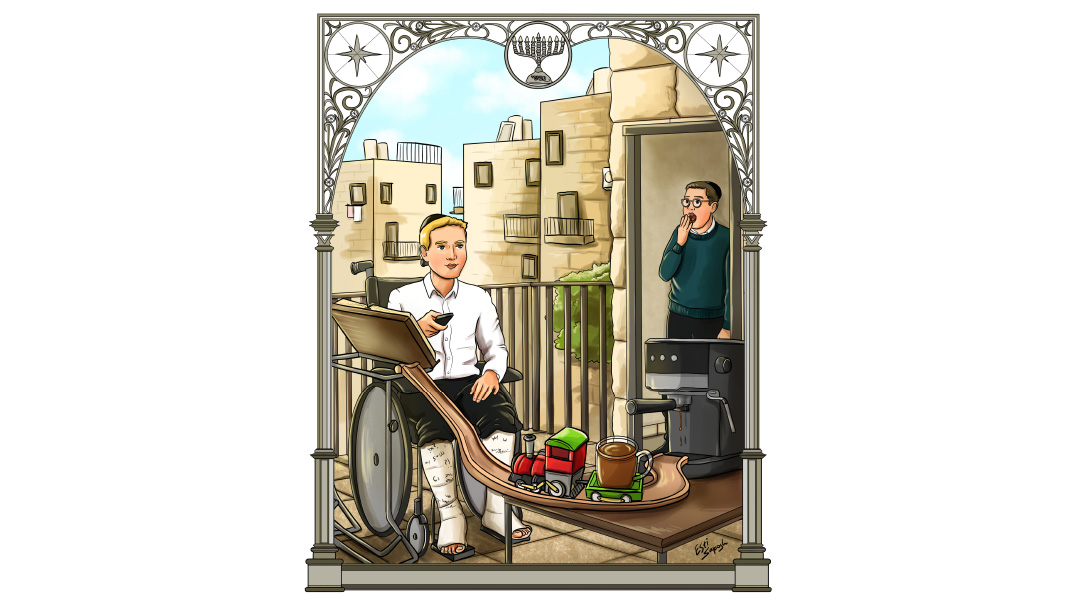
These questions had often haunted me, but never more than now, as I faced the small stone structure that was my mother’s first home. Batei Naittan was a cluster of such small buildings, several blocks behind Meah Shearim. Here my mother was born; my uncles hurried to shul along these same stones. Generations of my grandmother’s family had been born, lived, died — all within a small radius of this spot.
As I entered the small home, I felt a hushed reverence fall over me. The ceiling was domed, the floor wide ancient stone tiles with a dark mosaic pattern. One large room, with another small room attached — and that was it. The entire house. The tiny galley kitchen added somewhat haphazardly had not been there when my mother lived there. Water was drawn from the well in the courtyard, and she and her siblings had lived within the four walls of the one living room, the small bedroom belonging to my grandparents.
How was my life so starkly different just several short decades later? I was born on a bustling avenue, in a house that no longer exists — it had been razed to make room for change. Here, change had no place. What was good then was good now. I yearned for the contentment in life that they’d had.
Create a free account to keep reading.